Live with an orange cat? You already know the drill. One minute they’re asleep in a sunbeam, the next they’re sprinting across the house at 2 a.m., knocking a glass off the counter for no reason, or attacking your ankles like you personally wronged them. Orange cat owners joke about it so often that “orange cat behavior” has become its own internet category. But is there actually a reason behind the madness, or is it just a meme?
Turns out, there’s a mix of genetics, breed tendencies, and plain old cat instinct behind the chaos.
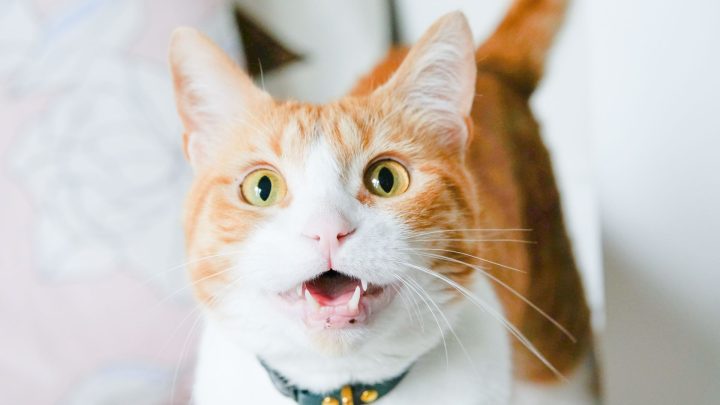
What’s Behind My Orange Cat’s Behavior
| Behavior You’re Seeing | Most Likely Cause | Normal or Worth a Vet Visit |
|---|---|---|
| Sudden sprinting, especially at night | Pent-up energy (FRAP) | Normal |
| Pouncing on feet or hands | Hunting instinct | Normal |
| Biting during petting | Overstimulation | Normal, manage with shorter sessions |
| Knocking items off surfaces | Attention-seeking or boredom | Normal, but reinforce good behavior instead |
| Increased vocalization at night | Boredom or hunger schedule | Usually normal |
| Sudden aggression with no trigger | Possible pain or illness | See a vet |
| Increased hiding plus hyperactivity | Stress or environmental change | Monitor, vet if it persists |
| Restlessness plus weight loss or increased thirst | Hyperthyroidism or other medical issue | See a vet |
Is “Orange Cat Energy” Actually Real?
Short answer: partly.
Orange fur in cats comes from a gene on the X chromosome. Because of how that gene works, orange cats are far more likely to be male (about 80% of orange cats are male, since males only need one copy of the gene while females need two).
This matters because male cats, regardless of color, tend to be more social, more food-motivated, and more prone to bold or attention-seeking behavior than female cats.
So the “orange cats are unhinged” stereotype isn’t really about the color itself. It’s about the fact that most orange cats happen to be male, and male cats as a group tend to be goofier and more high-energy.
Add in the fact that many orange cats are also mixed-breed tabbies with strong prey drive, and you get a cat that seems to run on a different frequency than your average tuxedo or calico.
The Most Common Reasons Your Orange Cat Is Acting Wild
1. The Zoomies (a.k.a. Frenetic Random Activity Periods)
This is the classic 2 a.m. sprint through the hallway, the sudden dash up and down the stairs, or the mad dash after literally nothing.
Vets call this FRAP (Frenetic Random Activity Periods), and it’s completely normal in cats of any color.
Cats are built to hunt in short, intense bursts, then rest for long stretches. If your cat is asleep 16-18 hours a day and gets little structured playtime, all that stored energy has to go somewhere. It usually comes out as a sudden burst of chaos.
2. Pent-Up Hunting Instinct
Indoor cats don’t get to stalk, chase, and pounce on real prey, but the instinct doesn’t go away just because there’s nothing to hunt.
That instinct shows up as:
- Pouncing on your feet under the blanket
- Chasing shadows or light reflections
- Randomly attacking a toy (or your hand) mid-cuddle
- Staring intensely at birds or bugs through a window
3. Not Enough Physical or Mental Stimulation
A bored cat is a chaotic cat.
Without enough play, climbing, or problem-solving during the day, cats build up restless energy that turns into knocking things off shelves, sprinting through the house, or picking fights with the family dog.
4. Overstimulation During Petting
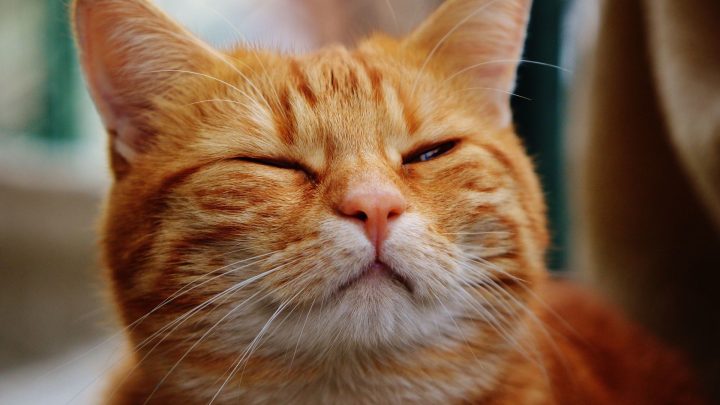
Some cats, especially high-energy males, can go from purring and leaning into your hand to biting or swatting within seconds.
This is called petting-induced overstimulation. It’s not aggression exactly; it’s more like their nervous system hits a limit and they need the touching to stop, right now.
5. Attention-Seeking Behavior
Orange cats have a reputation for being extra vocal and extra clingy.
If your cat has learned that knocking a cup off the table gets you to come running, that behavior gets reinforced every single time it works.
6. Age
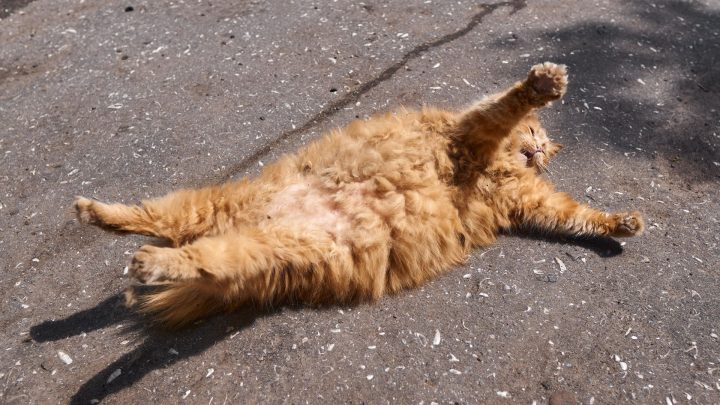
Kittens and young cats (under 2 years old) are dramatically more energetic than older cats. A lot of “crazy” behavior is simply a young, healthy cat with more energy than outlets.
7. An Underlying Medical Issue
If the “crazy” behavior is new, sudden, or paired with other changes, it’s worth ruling out a medical cause before assuming it’s just personality. This is covered in more detail below.
How to Calm Down a Hyper Orange Cat
None of these require anything fancy. Most are things you can start today.
- Give them two real play sessions a day. Ten to fifteen minutes each, using a wand toy that mimics prey (feathers, fake mice) works better than a laser pointer alone, since a laser gives no “catch” at the end and can actually build frustration.
- End play sessions with a small meal or treat. This mimics the natural hunt-catch-eat-groom-sleep cycle and helps your cat wind down afterward instead of staying wired.
- Add vertical space. Cat trees, window perches, or even a cleared-off bookshelf give your cat somewhere to climb, survey the room, and burn energy without destroying your furniture.
- Use puzzle feeders instead of a plain bowl. Making your cat “work” for food taps into their natural foraging instinct and slows down fast eaters too.
- Set a consistent schedule. Cats do better with predictable feeding and play times. A lot of nighttime chaos comes from an internal clock that has nothing to do during the day.
- Don’t reward attention-seeking chaos. If your cat knocks something over to get you to come running, try not to react with a big response. Instead, give attention when they’re calm.
- Watch your own reaction during overstimulation. If your cat gets twitchy tail, flattened ears, or dilated pupils while being petted, stop before they bite. Learning their signals prevents most overstimulation bites.
- Consider a second cat if your lifestyle allows it. A lot of hyperactive behavior in young, single cats comes from having no playmate. This isn’t the right fix for every household, but for an energetic cat home alone all day, a compatible companion can help enormously.
When “Crazy” Behavior Means It’s Time to See a Vet
Most orange cat chaos is completely normal. But certain patterns are worth getting checked out, because cats are good at hiding pain and illness until it’s fairly advanced.
Talk to your vet if you notice:
- A sudden behavior change with no clear cause
- Aggression that comes out of nowhere, especially if paired with a reluctance to be touched in a specific spot
- Increased thirst, urination, or appetite changes alongside hyperactivity (can point to hyperthyroidism, especially in cats over 8)
- Excessive vocalization at night in a senior cat
- Restlessness combined with vomiting, diarrhea, or weight loss
- Any change that started right after a household change (new pet, move, new baby) and hasn’t settled down after a couple of weeks
preguntas frecuentes
Not because of their color directly. Orange cats are more likely to be male, and male cats as a group tend to be more energetic, social, and food-driven. So the stereotype has some genetic logic behind it, even if the fur color itself isn’t the direct cause.
Cats are naturally most active at dawn and dusk. If your cat sleeps most of the day and doesn’t get much play, that built-up energy tends to come out at night in short, intense bursts known as zoomies.
This is usually petting-induced overstimulation, not aggression. Watch for early warning signs like a flicking tail or ears turning back, and stop petting before they feel the need to bite.
Yes, generally. Most cats become noticeably calmer between 2 and 4 years old as they move out of the kitten and adolescent stage.
It’s a common attention-seeking or boredom behavior, not a sign of anything wrong. Redirecting that energy into scheduled play and puzzle feeders usually reduces it over time.
It can help a lot, especially for young, single cats left alone during the day. It’s not a guaranteed fix for every cat’s personality, but many high-energy cats do better with a playmate their own size.




 English (United States)
  English (UK)
  German
  Italian
  Spanish
  French