You plant a smooch on your cat’s head. Your cat blinks, maybe purrs, maybe walks off to sit in a box. So what just happened in that furry little brain?
Plenty, as it turns out. Cats are sharper readers of human behavior than they get credit for. They pick up on our tone, our faces and our routines. The kiss itself is a human habit, though, and cats speak a different love language. Here’s what the science says, how to tell if your cat enjoys your kisses, and how to show affection in a way your cat will actually get.
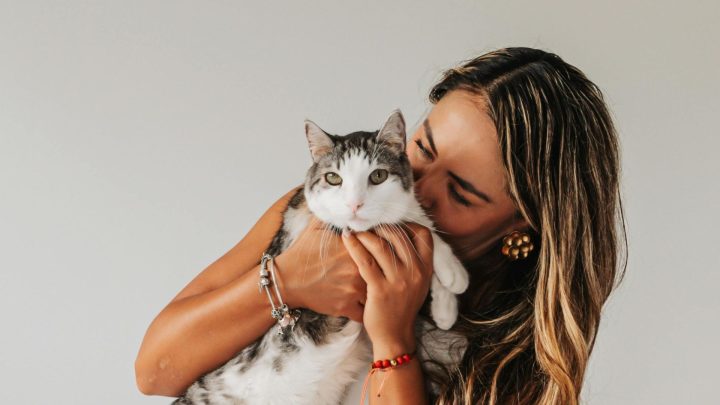
Do Cats Understand Kisses?
Cats don’t understand kisses the way people do. A kiss has no built-in meaning to a cat. Many cats do learn that a kiss arrives with things they already love, like your soft voice, your familiar scent and your full attention, so they come to read it as a friendly, safe moment.
What Does a Kiss Look Like to a Cat?
To a cat, a kiss starts as a big human face moving in close. Cats don’t kiss each other, so there’s no feline “script” for it. Your cat reads the moment through its own body language instead.
Here’s the twist: some parts of a kiss line up nicely with how cats bond, and some parts clash. Cats greet friends with nose touches and head rubs, and they groom each other on the head and neck. A soft peck on the top of the head lands right in that grooming zone. A face pushed straight into theirs with a long stare? That can feel a bit intense.
| What you do | How your cat may read it |
|---|---|
| Gentle kiss on the top of the head | Close to the spot cats groom on each other, so often welcome |
| Kiss paired with a soft, happy voice | A calm, friendly tone your cat learns to link with good things |
| Leaning in fast, face to face | A large face closing in, which can feel like pressure |
| Staring hard while you pucker up | A direct stare can come across as a challenge in cat language |
| Holding your cat still for a smooch | Restraint, which most cats dislike |
| Loud smacking or squeaky kissy noises | Sudden sounds that may startle a sensitive cat |
So the gesture is foreign, but the context tells your cat a lot. Calm, slow and gentle reads as friendly. Fast, loud and grabby reads as “get me out of here.”
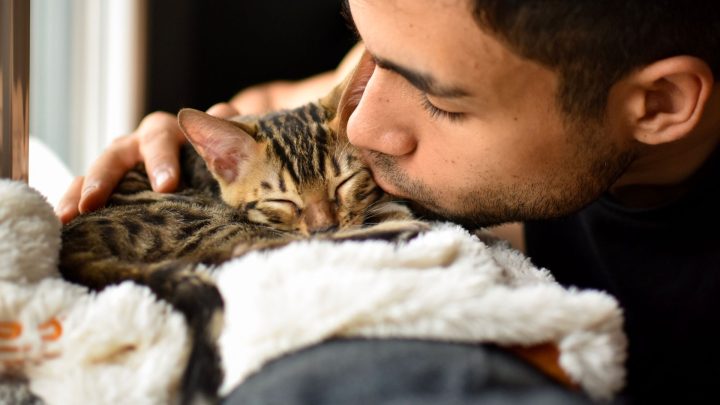
What Science Says About Cats and Human Affection
No study has put kisses under the microscope yet. Researchers have, however, tested how well cats read our faces, voices and moods, and the results are good news for smoochy cat parents.
Cats notice when you smile
In a 2016 study in Animal Cognition, psychologists Moriah Galvan and Jennifer Vonk found that cats purred, rubbed and settled on laps more often when their owner was smiling than when the owner was frowning. The effect was modest, and strongest with the cat’s own person. Your cat is learning su face specifically.
Cats match your face to your voice
A 2020 study in the journal Animals played cats a happy or angry human voice, then showed them two photos. Cats looked longer at the face that matched the sound they had just heard. In other words, your cheerful “who’s a good kitty?” and your relaxed face add up to one clear message.
Cats bond with their people
The old “aloof cat” myth took a hit in 2019. Researchers at Oregon State University ran a classic attachment test on 108 cats and published the results in Current Biology. About two thirds of the cats were securely attached to their owners, a rate close to what’s seen in human babies and dogs.
Put it together and here’s what it means for kisses: your cat probably doesn’t know what lips on fur are for. It does notice the smile, the soft voice and the relaxed body that come with them. Over time, that bundle can become a signal your cat recognizes and enjoys.
How to Tell if Your Cat Likes Your Kisses
Your cat will tell you, just not in words. Watch the body language in the few seconds before, during and after a smooch.
Green lights: your cat is into it
- Purring or a relaxed rumble while you’re close.
- Leaning in or pushing its head toward your face.
- Slow blinks or soft, half-closed eyes.
- Head bunts or cheek rubs on your chin or nose.
- Tail held up, sometimes with a little hook at the tip.
- Staying put or coming back for more after the kiss.
- Licking you back, which is basically a grooming return gift.
Red flags: your cat would rather skip it
- Ears flattening sideways or back.
- Tail swishing or thumping, especially fast flicks.
- Skin twitching along the back.
- Turning the head away or pulling back.
- Pupils suddenly widening in a bright room.
- Freezing or going stiff in your arms.
- A warning nip, swat or hiss. That’s a firm “no thanks.”
One red flag doesn’t mean your cat dislikes you. It usually means this kind of attention, right now, isn’t welcome. Back off, give some space and try a gentler approach later.
Quick test: Lean in slowly and stop a few inches away. If your cat closes the gap, you have permission. If it leans back, take the hint.
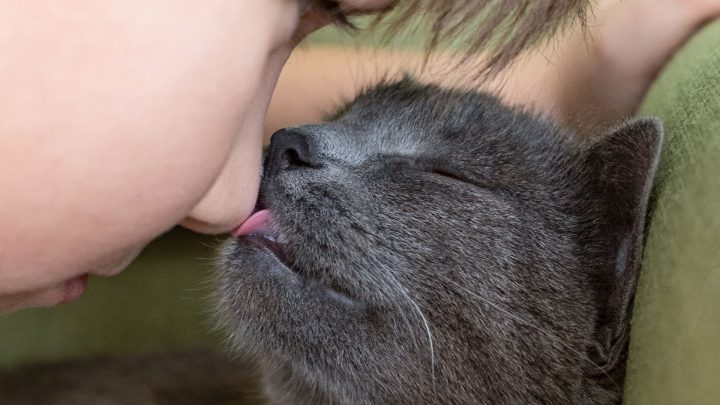
How Cats Show Love Back (The Cat Version of a Kiss)
Cats have their own affection toolkit, and the star of the show is the slow blink. A 2020 study in Scientific Reports from the Universities of Sussex and Portsmouth found that cats narrowed their eyes back more often when their owners slow blinked at them. Cats were also more likely to walk up to a stranger who had slow blinked at them than to one with a neutral face. The researchers describe it as a form of positive communication, and many people call it the “cat smile.”
| Cat behavior | What it usually means |
|---|---|
| Slow blink | “I feel safe and relaxed with you” |
| Head bunt or cheek rub | Marking you with their scent, a sign you’re part of the family |
| Licking your hair or hand | Social grooming, the way bonded cats care for each other |
| Kneading with paws | Comfort and contentment, a leftover habit from kittenhood |
| Tail straight up on approach | A friendly hello |
| Sleeping next to you | Trust, since a sleeping cat is a vulnerable cat |
| Rolling over nearby | Relaxed and trusting (a belly display is often no an invitation to rub!) |
How to give your cat a “kiss” in its own language
- Sit or lie down a few feet away while your cat is calm.
- Look at your cat with a soft, relaxed face.
- Narrow your eyes slowly, as if you’re smiling with your eyes.
- Close them for a second or two, then open them slowly.
- Look slightly away and wait. A slow blink back means your message landed.
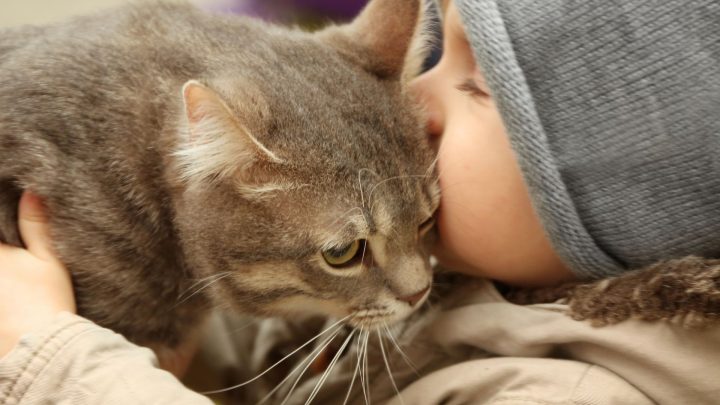
How to Kiss Your Cat (So It Actually Enjoys It)
The best kisses follow the same rules as the best petting: let your cat choose, aim for the face and head, and keep it short. A 2015 study of 54 cats found cats reacted most negatively when stroked near the base of the tail. Later research from Nottingham Trent University, covered by ScienceAlert, found cats preferred people who let them lead and who touched the cheeks, chin and base of the ears.
Your cat’s comfort map
| Zone | Body areas | Kiss or touch here? |
|---|---|---|
| Green | Top of head, cheeks, chin, base of the ears | Yes, most cats enjoy it |
| Yellow | Back, shoulders, legs, tail | Go lightly and watch for reactions |
| Red | Belly, base of the tail, paws | Usually a no for kisses and pets |
Do’s
- Let your cat come to you first.
- Offer your hand or nose for a sniff before going in.
- Kiss the top of the head or forehead, not the mouth or nose.
- Keep it quick, a second or two is plenty.
- Pair it with a soft voice and a slow blink.
Don’ts
- Don’t hold or pin your cat to sneak in a smooch.
- Don’t kiss a sleeping cat and startle it awake.
- Don’t push on after a red flag like flattened ears or a swishing tail.
- Don’t go face first with a cat you just met.
A quick word on hygiene
Cat kisses are generally low risk for healthy adults, but skip the lips. Cat mouths carry bacteria, including Bartonella henselae, the germ behind cat scratch disease. The CDC notes it can spread through bites or when a cat licks an open wound, and up to 1 in 3 healthy cats may carry it. A few simple habits help:
- Kiss fur, not mouths.
- Don’t let your cat lick cuts or scrapes.
- Wash your hands after cuddles, especially with kittens or new cats.
- Keep your cat on a vet-recommended flea treatment.
- Take extra care if you’re pregnant, elderly or have a weakened immune system.
Your cat may never know what a kiss means, and honestly, it doesn’t need to.
What it picks up on is you: your gentle voice, your relaxed face and the way you respect its “not now.” Keep the smooches soft and short, toss in a slow blink or two, and let your cat set the pace.
Chances are you’ll get a head bunt, a purr or a sleepy-eyed blink in return, and in cat language, that’s a kiss right back.
FAQs About Cats and Kisses
Some do, some tolerate it and some would rather pass. It depends on your cat’s personality, history and how you do it. Gentle head kisses from a trusted person tend to go over best.
They can’t decode the meaning of a kiss, but they do read your mood. Research shows cats respond to smiles, happy voices and calm body language, especially from their own owners.
That’s most likely social grooming. Bonded cats lick each other to share scent and strengthen their bond, so your cat may be returning the favor.
Usually it’s a polite “enough now.” Some cats get overstimulated by close contact and give a soft nip as a warning. Shorter kisses and watching for tail flicks can prevent it.
In their own way, yes. Slow blinks, head bunts, nose boops and grooming licks are the closest thing cats have to a kiss.
For most healthy adults, a kiss on the head is low risk. Avoid mouth-to-mouth contact, keep your cat off open wounds and wash your hands after handling kittens or unfamiliar cats.
It’s best to skip it. The nose and mouth area is sensitive and germier. The forehead and top of the head are friendlier spots.
Often, yes. Keep kisses short and gentle, let your cat approach first and pair them with things it loves, like chin scratches or a treat. Some cats will never be fans, and that’s okay.





 English (United States)
  English (UK)
  German
  Italian
  Spanish
  French