Your cat is curled up on the couch, fast asleep, when suddenly its paws start twitching and its whiskers flutter. A quiet chirp escapes. Then everything settles again like nothing happened. Science has a pretty solid answer for why these things happen to cats.
Cats almost certainly dream. Researchers have known this for decades!
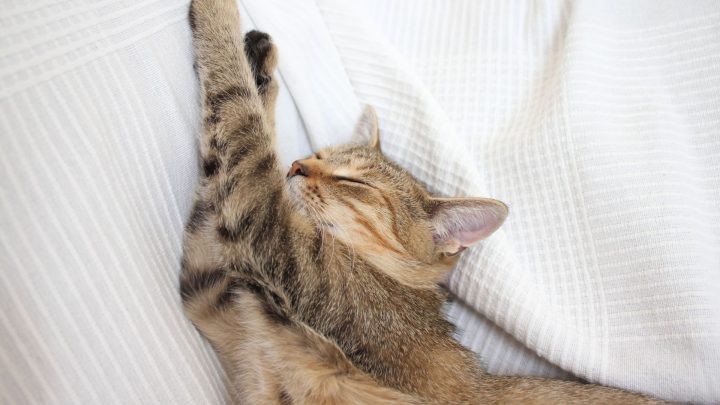
Yep, Cats Can Dream!
Cats spend roughly a quarter of their sleep time in REM (rapid eye movement) sleep, the same stage where most human dreaming happens. During REM, a cat’s brain activity looks similar to when it’s awake, even though the body stays mostly still.
Scientists can’t read a cat’s mind, so nobody can say for certain what images play out behind those closed eyes. But based on brain activity, behavior, and decades of sleep research, most veterinary neurologists and sleep scientists agree that cats do dream, and those dreams likely draw from their daily routines.
How a Cat’s Sleep Cycle Actually Works
Cats sleep a lot. Most adult cats log somewhere between 12 and 16 hours a day, and kittens or senior cats often sleep even more. But not all of that sleep is the same.
Like humans, cats move through distinct sleep stages, and each one serves a different purpose:
| Sleep stage | Share of sleep time | What’s happening |
|---|---|---|
| Light sleep (dozing) | ~50-55% | Cat is resting but easily woken. Ears may still twitch toward sounds. |
| Non-REM (deep) sleep | ~20-25% | Body repairs tissue, muscles fully relax, breathing slows and steadies. |
| REM sleep | ~20-25% | Brain activity spikes, eyes move rapidly under closed lids, dreaming likely occurs. |
A full cat sleep cycle typically runs about 25 minutes, much shorter than the 90-minute cycles humans go through. That means a napping cat can drop into REM sleep, and dream territory, several times in a single afternoon.
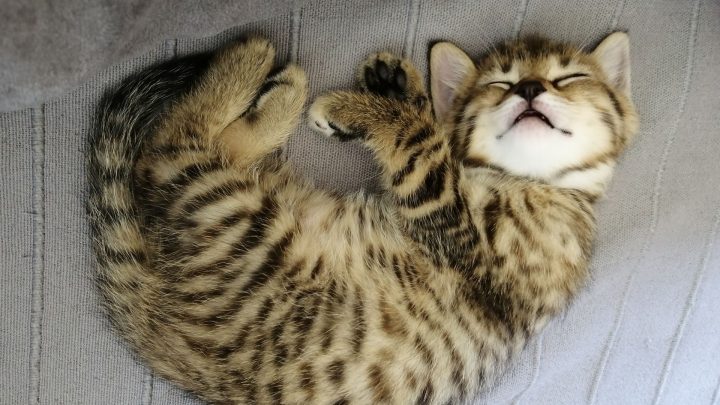
The Research Behind the “Yes”
Nobody can hook a cat up to a machine and ask it what it dreamed about. So how do scientists get to “cats probably dream” as an answer? Two lines of evidence carry most of the weight.
1. Brain wave patterns match waking activity. Using EEG (electroencephalogram) readings, researchers can track a cat’s brain activity during sleep. During REM, those readings look strikingly close to the patterns recorded when a cat is awake and alert. That’s the same pattern seen in a well-known rat study, where researchers recorded brain activity while rats ran a maze and again while the same rats slept. The sleeping brainwaves closely resembled the maze-running ones, which suggested the rats were mentally replaying the maze while asleep.
2. The “acting out dreams” experiments. In the 1960s, French sleep researcher Michel Jouvet ran a series of studies that became foundational to this whole field. Normally, a structure in the brainstem paralyzes the body’s voluntary muscles during REM sleep, which is why sleeping animals (and people) don’t get up and act out what’s happening in their heads. Jouvet selectively disabled that mechanism in sleeping cats. What happened next: the cats began stalking, pouncing, arching their backs defensively, and swatting at things that weren’t there, all while still asleep. It looked like the cats were physically performing scenes from a dream.
Modern researchers still refer back to this work, and newer imaging tools like fMRI have added more detail without overturning the basic conclusion.
What Do Cats Actually Dream About?
Nobody can say for sure, since a cat can’t describe a dream after waking up. But researchers have a reasonable guess based on how dreaming works in other mammals. In humans, REM sleep is closely tied to memory processing, the brain sorts through the day’s events and experiences while we sleep. If the same holds for cats, their dreams likely draw from familiar, everyday material rather than anything abstract.
Based on that logic, a cat’s dream content probably includes things like:
- Chasing a toy, bird, or bug from earlier that day
- Hunting behaviors, since these are wired deep into feline instinct
- Familiar people or animals in the household
- Exploring rooms, climbing furniture, or investigating new smells
- Minor conflicts, like a tense moment with another cat or dog
One vet interviewed by a major pet health publication described dreaming in cats as a way of mentally replaying natural behaviors like hunting, playing, eating, or grooming. That lines up with what Jouvet’s cats appeared to be doing decades earlier.
Signs Your Cat Is Dreaming
You don’t need any equipment to notice a cat in REM sleep. Watch for these while your cat naps:
- Twitching paws or claws flexing in and out
- Whiskers fluttering or twitching
- Rapid eye movement visible under closed eyelids
- Soft vocalizations like chirps, quiet meows, or faint growls
- Slight tail flicking
- Occasional muscle twitches through the body
All of these are normal and don’t need any intervention. They’re simply signs of an active, dreaming brain doing its nightly (or afternoon) work.
Can Cats Have Nightmares?
It’s possible, though harder to confirm than pleasant dreams.
If a sleeping cat suddenly hisses, growls, thrashes, or wakes up startled and disoriented, it may be reacting to something unpleasant in a dream, similar to how a person might jolt awake from a bad one. This tends to happen more in cats that have experienced trauma, stress, or a recent scary event.
If your cat wakes up from sleep looking distressed on a regular basis, it’s worth mentioning to your vet. Occasional restless sleep is normal, but frequent distress during rest could also point to pain, anxiety, or a medical issue rather than a dream at all, so it’s worth ruling those out.
Should You Wake a Twitching Cat?
Generally, no.
Twitching, chirping, and paw movement during sleep are normal parts of the REM cycle, not signs of distress. Waking a cat abruptly during deep sleep can actually startle it and, in rare cases, provoke a reflexive scratch or bite before it’s fully alert.
Let sleeping cats lie unless they seem genuinely distressed (loud crying, thrashing, or trouble breathing), in which case a gentle voice from a few feet away is a safer way to rouse them than touching them directly.
Helping Your Cat Get Better Sleep
Since a big chunk of a cat’s day is spent asleep, and dreaming depends on getting into deep REM cycles, good sleep habits matter. A few doable steps:
- Keep a consistent routine. Feed and play with your cat around the same times each day. Predictability helps regulate their sleep-wake cycle.
- Give them a quiet, warm spot. Cats prefer sleeping somewhere cozy and away from constant foot traffic or loud noise.
- Tire them out before bedtime. A 10-15 minute play session with a wand toy or laser in the evening mimics a hunt-and-catch cycle, which tends to lead to a deeper, more satisfied rest afterward.
- Watch for excessive sleep changes. A sudden jump in sleep time, or a cat that seems unable to settle at all, is worth flagging to a vet, since both can signal an underlying health issue.
- Avoid disrupting naps unnecessarily. Frequent interruptions to sleep can reduce how much time a cat spends in the deeper stages where dreaming happens.
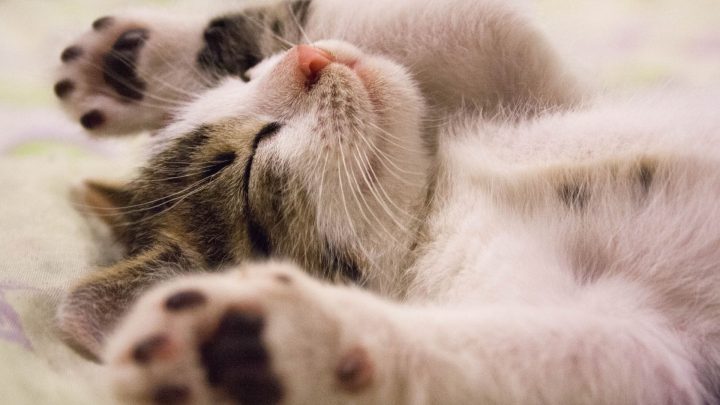
Cat Sleep vs. Human Sleep
| Cats | Humans | |
|---|---|---|
| Average sleep per day | 12-16 hours | 7-9 hours |
| Length of one sleep cycle | ~25 minutes | ~90 minutes |
| Share of sleep spent in REM | ~20-25% | ~20-25% |
| Dreams tied to daily events | Likely, based on brain activity | Confirmed through direct reporting |
| Can “act out” dreams if REM paralysis fails | Yes (shown in lab studies) | Yes (known as REM sleep behavior disorder) |
The overlap here is a big part of why researchers feel comfortable saying cats dream. The mechanics of feline REM sleep track closely with the human version, right down to a rare disorder that shows up in both species when the body’s dream-paralysis system fails.
A Note on Further Research
Today’s post draws on veterinary and sleep-science reporting from Purina, Cats Protection, PetMD, Chewy, and coverage of Michel Jouvet’s original 1960s REM sleep research.
For anything related to your own cat’s sleep or behavior changes, a licensed veterinarian is the best source for advice specific to your pet.
FAQs
As far as researchers can tell, any cat that experiences REM sleep has the biological setup for dreaming. Since REM sleep is a standard part of the feline sleep cycle, this likely applies to nearly all healthy cats, including kittens.
Kittens spend more total time asleep than adult cats, and some research on other young mammals suggests a higher proportion of that sleep is REM sleep, possibly because REM sleep supports brain development. So kittens may spend more time in dream-capable sleep, even if nobody can confirm what they’re dreaming about.
There’s no way to confirm this directly, but it’s a reasonable guess. If cat dreams pull from daily memories and emotionally significant events, and their owner is a regular, meaningful presence in their life, that person could plausibly show up in a dream.
Twitching paws, whiskers, or tail during sleep usually means your cat is in REM sleep and its brain is highly active, similar to how humans twitch during vivid dreams. This is normal and not something to worry about unless it’s paired with signs of real distress.
Normal REM twitching is usually brief, localized (like paws or whiskers), and the cat wakes up calm and alert if disturbed. A seizure tends to involve the whole body, may include drooling, loss of bladder control, or a dazed, disoriented state afterward that lasts several minutes. If you’re ever unsure, record a video and show it to your vet.
There’s no strong research specifically on this, but older cats generally sleep more overall and may spend a different proportion of that time in REM versus deep sleep, which could change how often dreaming occurs. Cognitive changes in senior cats can also affect sleep patterns, so any major shift in an older cat’s sleep behavior is worth a vet visit.





 English (United States)
  English (UK)
  German
  Italian
  Spanish
  French