You spot a wet streak running down your cat’s cheek and your heart sinks a little. Is she sad? Did you hurt her feelings when you moved her off the keyboard?
Here’s the good news: cats can make tears, but they don’t cry them out of sadness. When a cat’s eyes are watering, the cause is physical, things like dust, an infection, or a blocked tear duct. Your cat still has feelings, of course. She just shows them in other ways.
Can Cats Cry Tears?
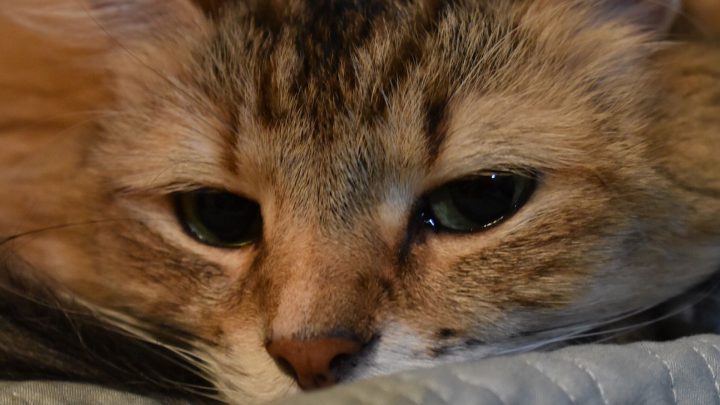
Yes, cats produce real tears to keep their eyes clean and moist. No, cats don’t shed emotional tears. Veterinarians agree that humans appear to be the only animals that cry for emotional reasons, so a teary cat usually has an eye problem worth checking.
Below, we’ll cover how cat tears work, how cats really show their emotions, what watery eyes can mean, and when it’s time to call your vet.
How Cat Tears Actually Work
Cats have tear glands and tear ducts much like ours, and they make tears all day long without you ever noticing. According to the Merck Veterinary Manual, the tear gland sits at the top outer edge of each eye and makes the watery part of the tear film.
Here’s the journey a single tear takes:
- Made: The tear gland releases fluid onto the eye.
- Spread: Every blink sweeps that fluid across the surface, washing away dust and keeping the eye moist.
- Drained: Tears flow into tiny openings near the inner corner of the eye.
- Gone: They travel down the nasolacrimal duct and empty quietly into the nose.
When this system runs smoothly, you never see a drop. You only notice tears when the eye makes too much fluid or the drainage path gets blocked, so the extra spills onto the fur. Vets call this overflow epiphora.
What tears do for your cat
- Lubricate the eye so blinking stays smooth and comfortable
- Flush out dust, litter particles, and stray hairs
- Protect against germs with natural antibacterial proteins
- Feed the clear cornea, which has no blood vessels of its own
So tears are a normal, healthy part of cat life. It’s the visible tears that deserve a closer look.
Do Cats Cry When They’re Sad?
Not with tears. Cats feel fear, stress, frustration, and loneliness, but their tear glands don’t respond to those feelings the way ours do. As emergency vet Dr. Carly Fox explained to Chewy’s pet education team, cats may “cry” from stress, pain, or loneliness, yet they don’t produce tears in the human sense.
When people say a cat is “crying,” they almost always mean the sound: a long, mournful meow or yowl. That vocal crying is very real and worth paying attention to.
How a sad or stressed cat shows it
Watch for changes from your cat’s normal routine:
- Hiding more than usual, under beds or in closets
- Vocal changes, like extra yowling at night or going unusually quiet
- Appetite shifts, eating much less or sometimes more
- Grooming changes, either a messy coat or over-licking bald patches
- Litter box slips, peeing or pooping outside the box
- Less play and cuddling, or sleeping far more than normal
- Tail and posture cues, such as a tucked tail, crouched body, or a tail lashing back and forth
How to read pain on your cat’s face
Cats are masters at hiding pain. Researchers at the Université de Montréal built the Feline Grimace Scale to help vets spot it from facial expressions alone. Squinting is one of its signs, which is another reason not to confuse a teary, squinty cat with a sad one.
| Feature | Relaxed cat | Cat in pain |
|---|---|---|
| Ears | Facing forward | Flattened and rotated outward |
| Eyes | Open and round | Squinted or partly closed |
| Muzzle | Soft and rounded | Tense and tight |
| Whiskers | Loose and curved | Straight and pushed forward |
| Head | Above shoulder line | Hanging low |
If your cat shows several pain signs at once, call your vet. The AVMA notes that on this scale, a total score of 4 or more out of 10 means the cat needs pain relief.
Why Is My Cat’s Eye Watering? 8 Common Causes
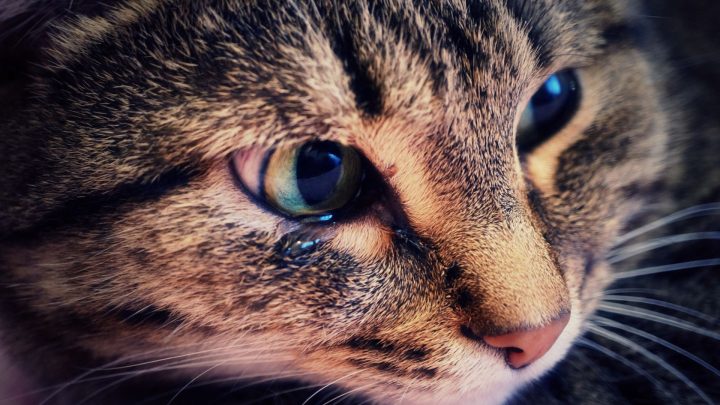
Watery eyes come down to two problems: the eye is making too many tears, or the tears can’t drain away. PetMD points to viral infection, often feline herpesvirus, as the most common cause in cats.
| Cause | What you might notice | What to do |
|---|---|---|
| Feline herpesvirus or calicivirus | Sneezing, runny nose, goopy eyes, often both eyes | Vet visit; keep sick cats apart from others |
| Conjunctivitis (pink eye) | Red, puffy eyelid lining, squinting, discharge | Vet visit for drops or ointment |
| Allergies | Clear tears, itchy face, seasonal flare-ups | Reduce triggers; ask your vet about relief |
| Irritants | Clear tears after dust, smoke, sprays, or scented litter | Remove the irritant; watch for 24 hours |
| Something in the eye | Pawing at one eye, sudden tearing, blinking | Same-day vet visit; don’t try to remove it yourself |
| Scratched cornea or eye injury | Squinting, one eye shut, cloudy spot | Same-day vet visit |
| Blocked tear duct | Constant clear tears, brown staining, cat seems fine | Mention it at your next checkup |
| Flat-faced anatomy | Lifelong mild tearing in Persians, Himalayans, and similar breeds | Daily gentle wiping |
Infections top the list for good reason. The Cornell Feline Health Center calls conjunctivitis the most common eye disorder in cats and says many cats will have at least a mild bout during their lives. It shows up most in young cats and in cats whose immune systems are weakened by FIV or FeLV.
Normal Eye Gunk vs. a Vet Visit
A tiny bit of dark crust in the eye corner after a nap is usually nothing to stress about. Color, amount, and your cat’s behavior tell you the rest.
Eye discharge color guide
| Discharge | What it often means | How urgent |
|---|---|---|
| Small dry brown or black crust | Normal dried tears | No worry; wipe away |
| Clear and watery, both eyes | Irritants, allergies, or early viral infection | Watch for 24 to 48 hours |
| Clear and constant, cat acts normal | Blocked duct or breed anatomy | Bring it up at the next checkup |
| Yellow or green | Bacterial infection, often after a virus | Book a vet visit soon |
| Thick, sticky, or gluing the eye shut | Infection or more serious eye disease | Book a vet visit soon |
| Red or bloody | Injury or underlying illness | Same day |
Call your vet the same day if you see:
- Squinting or an eye held shut
- Pawing or rubbing at the face
- A cloudy, blue, or white spot on the eye
- Pupils of different sizes
- The third eyelid (a pale membrane) covering part of the eye
- Swelling around the eye
- Tearing plus not eating, hiding, or fever
One more tip from vets: don’t reach for human eye drops unless your vet tells you to. Some ingredients that are fine for people can hurt cats’ eyes.
Cat Breeds That Tear Up More Often
Some cats look teary their whole lives thanks to the shape of their face. Flat-faced (brachycephalic) breeds have shallow eye sockets, prominent eyes, and squished tear ducts that drain poorly. The Merck Veterinary Manual notes that tear overflow from a blocked duct is more common in Persians and Himalayans, and in most cases it causes no medical problems.
Breeds that often deal with tearing and tear stains:
- Persian
- Himalayan
- Exotic Shorthair
- British Shorthair (some lines with shorter faces)
- Scottish Fold
What about those rusty tear stains?
The reddish-brown streaks under some cats’ eyes come from pigments in tears that tint the fur as it stays damp. They show up most on white, cream, and silver coats. Vetster also flags long-haired cats as more likely to have ongoing discharge, since stray hairs can poke the eye. Stains on their own are a cosmetic issue, though a sudden increase is worth a vet check.
How to Clean Your Cat’s Eyes Safely
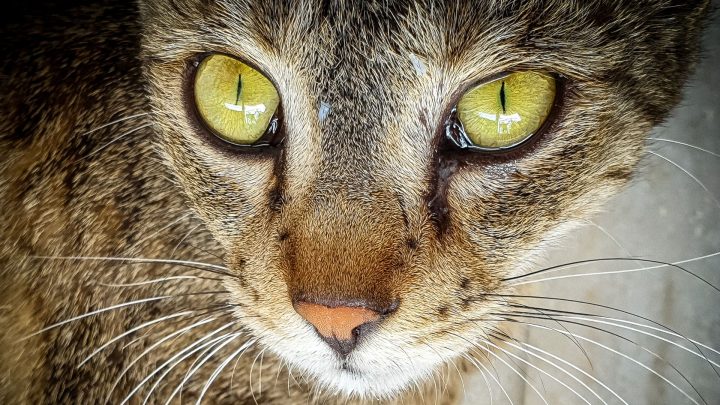
For everyday crust or mild breed-related tearing, a quick wipe keeps your cat comfortable and stops stains from setting in. PetMD suggests gentle, unscented, pet-safe wipes for cats with long-term watery eyes.
You’ll need: cotton pads or a soft cloth, warm water (or a vet-approved eye wipe), a towel, and treats.
- Pick a calm moment. Right after a meal or a nap works great.
- Get cozy. Sit your cat on your lap or wrap her loosely in a towel if she wiggles.
- Dampen a cotton pad with warm water. Never use soap, tea, saline you made yourself, or human eye drops.
- Wipe outward. Start at the inner corner and move away from the eye, never across the eyeball.
- Use a fresh pad for each eye so you don’t spread germs from one side to the other.
- Pat the fur dry to slow staining.
- Reward her. A treat makes next time a lot easier.
If the gunk comes back within a day, changes color, or your cat fights the wipe because her eye hurts, skip the home care and see your vet.
FAQs About Cats and Crying
Not from the pain itself. A cat with a sore paw won’t tear up. An eye that hurts, though, from a scratch, infection, or glaucoma, will often water as a protective reflex. Pain elsewhere in the body shows up as hiding, yowling, or a tense face instead.
Some cats meow or yowl when left alone, especially cats with separation stress. Those are vocal cries with no tears. If your cat cries every time you head out, more play before you leave and a puzzle feeder can help.
Research suggests cats can pick up on human emotions through our voice and facial cues, so many cats do notice when you’re upset. Some come closer for a cuddle; others give you space. Either response is normal.
We’re wired to read tears as sadness. In one study described by Hepper, people viewed animal photos with digitally added tears and rated those animals as more emotional and friendlier, even though nothing else had changed.
One watery eye often points to something local, like a stray hair, a scratch, or debris. Since injuries can get worse fast, one-sided tearing with squinting deserves a same-day vet call.
Kittens make tears for the same reasons adult cats do. Young kittens get eye infections often, so goopy or crusted-shut eyes in a kitten need a vet visit soon.
Very. Citing the Cornell Feline Health Center, Great Pet Care reports that up to 97% of cats are exposed to feline herpesvirus during their lives, and many carry it long term. Flare-ups often happen during stressful times like moving or boarding.
It’s unlikely. Vetster notes that feline conjunctivitis rarely spreads from cats to their owners. It does spread easily between cats, so wash your hands after wiping a sick cat’s eyes.
Mild tearing from dust or a passing irritant often clears within a day or two. Tearing that lasts longer, gets thicker, or changes color needs a vet to find the cause.



 English (United States)
  English (UK)
  German
  Italian
  Spanish
  French