The fastest way to introduce a new dog to your resident dog or cat is, funnily enough, the slow way. Give everyone their own space first, let noses do the early work, then build up to short, supervised meetings. Most households see real progress within a few weeks, though some pairs need a few months.
Your first day sets the tone. A rushed hello in the living room can turn a curious dog into a defensive one, and a scared cat can hold a grudge for weeks.
| Question | Dog meeting a resident dog | Dog meeting a resident cat |
|---|---|---|
| Where to start | Neutral ground, like a park or a friend’s yard | Inside your home, with a door or gate between them |
| First contact | Scent swap, then parallel leashed walks | Scent swap, then sightings through a gate |
| Leash during early meetings? | Yes, loose leash, one handler per dog | Yes, on the dog only; the cat moves freely |
| Typical timeline | A few days to several weeks | Several weeks to a few months |
| Biggest risk | Fights over food, toys or space | Chasing, and injury to the cat |
| Alone together? | Only after weeks of calm, supervised time | Only after a long track record, and some pairs never |
Get Your Home Ready Before the New Dog Arrives
A little setup work now saves you a lot of refereeing later. Aim to have these done before pickup day.
- Set up a separate zone for the new dog. A spare room, a crate area or a gated section works. San Diego Humane Society calls this a “success station” stocked with food, water, a bed and toys.
- Build a cat sanctuary (if you have a cat). Pick a room the dog never needs to enter, with litter, food, water and hiding spots. Add at least one high perch in every room so your cat always has an escape route.
- Pick up anything worth fighting over. Food bowls, bones, chews, favorite toys and even prized beds can spark guarding. A shelter guide from Pet Alliance of Greater Orlando recommends clearing these high-value items before the new dog comes home.
- Install baby gates or exercise pens. Tall, sturdy gates let pets see each other without touching. Cats squeeze through gaps and jump, so check the fit.
- Line up a helper. You need one calm adult per dog for the first meetings.
- Stock up on small, tasty treats. You will hand out a lot of rewards for calm behavior.
- Brush up on basic cues. “Sit,” “look” and “leave it” give you a way to redirect attention fast.
- Consider a calming diffuser. The RSPCA notes that dog appeasing pheromone (DAP) diffusers may help both dogs settle.
- Check health paperwork. New dogs can carry illness. Follow any quarantine advice from your shelter or vet before the animals share space.
Give the new dog time to decompress
Shelter life is stressful, and a move is a big change. Houston’s BARC shelter suggests letting a new dog adjust for roughly 3 days to 2 weeks before full introductions. Many rescues sum this up with the 3-3-3 rule: about 3 days to decompress, 3 weeks to learn the routine and 3 months to feel at home.

How to Introduce a New Dog to Your Resident Dog
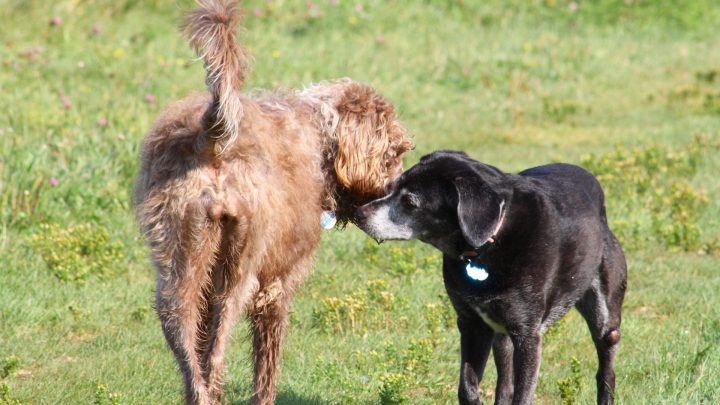
Dogs read a stranger on their turf as a possible intruder, so the first meeting goes better away from home. Move to the next step only when both dogs stay loose and relaxed at the current one.
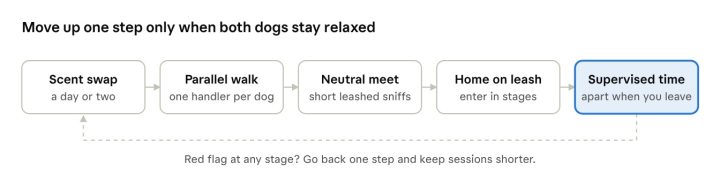
- Swap scents first. Trade a blanket or towel between the dogs a day or two before they meet. The RSPCA recommends letting dogs get used to each other’s scent before any contact.
- Go for a parallel walk. Each dog gets its own handler. Walk in the same direction with plenty of space between you, then slowly close the gap. Oregon Humane Society points out that the goal is walking, not interacting.
- Meet on neutral ground. A quiet park or a friend’s large yard keeps your resident dog from feeling it has to defend its home. Purdue University’s veterinary hospital explains that this lowers the odds your dog sees the newcomer as an intruder.
- Keep leashes loose. A tight leash sends tension straight down the line. Let the dogs sniff for 3 to 5 seconds, then call them apart with a happy voice and a treat. Repeat a few times.
- Head home in stages. Let the new dog explore the house first while a helper keeps your resident dog outside or in another room. Then bring them together in the yard or a large room, still on leash.
- Supervise everything for the first few weeks. When you cannot watch, use crates, gates or separate rooms. Oregon Humane Society advises keeping dogs apart when you’re away until they’ve proven they get along.
- Feed separately, every time. Use different rooms or stand between the bowls, and pick up dishes as soon as both dogs finish. Save bones and long-lasting chews for crate time.
Got more than one resident dog?
Introduce them to the newcomer one at a time. Brown University’s dog behavior guide and Oregon Humane both recommend this, since a group can overwhelm a new dog.
Bringing home a puppy?
Puppies bounce, nip and climb on faces, and they miss an older dog’s “back off” signals. Give your senior dog a puppy-free retreat, keep play sessions short, and step in before your older dog runs out of patience. Never leave a puppy alone with an adult dog until you are sure the puppy is safe.
Keep your resident dog’s routine the same
Same walks, same meal times, same cuddle spots. Praise your resident dog whenever the new dog walks up, so the newcomer becomes a signal that good things happen.
How to Introduce a New Dog to Your Resident Cat
Dog-to-cat introductions happen at home and move slower, because a dog can hurt a cat in seconds. Your cat sets the pace here. If the cat is hiding, hissing or refusing food, take a step back.
- Keep them fully apart for the first several days. A closed door between them is your best friend. The ASPCA suggests using this time to bond with your dog and practice cues like sit, look and touch.
- Swap scents daily. Trade bedding or rub a cloth on each pet and leave it with the other. Reward your dog with a treat for calm sniffing. Keep swapping until both pets stop caring about the smell.
- Feed on opposite sides of a closed door. Mealtime builds a happy link between the other animal’s smell and food. Move the bowls closer to the door over a few days.
- Allow short sightings through a gate. Keep your dog on leash and let your cat choose whether to come closer. Reward your dog each time it looks at the cat and then looks back at you. Best Friends Animal Society calls this the “Look at That” (LAT) game.
- Close the distance slowly. Over several weeks, move closer only while your dog stays calm and still answers to its name. If your dog stares at the cat for more than about 3 seconds, redirect its attention.
- Try leashed time in the same room. Hold your dog on a loose leash while your cat moves freely. Ask your dog to sit or lie down, and pay well for ignoring the cat.
- Supervise loose time, and separate when you leave. Even friendly pairs should be apart when nobody is home, at least for the first few months.
Give your cat the high ground
Cats feel safer when they can look down on the action. Cat trees, cleared shelves and window perches let your cat watch the new dog without being chased. A cat with a guaranteed escape route is far more likely to stay curious instead of fearful.
Kittens and small dogs need extra care
Kittens are fragile, and an adult dog may not realize how strong it is. Use gates and leashes to keep them apart any time you cannot watch closely.
Some dogs and cats should not share space
Strong prey drive can make a dog unsafe around cats, no matter how good your training is. The ASPCA flags intense staring, slow stalking, obsessive chasing and a history of injuring animals as warning signs. If you see these, keep the pets separated and call a certified behavior consultant.
Body Language Cheat Sheet aka the Green Lights and Red Flags
Your pets will tell you how the introduction is going long before a growl or a swat. The American Kennel Club reminds owners that no single signal tells the whole story, so read the whole body and the situation together.
| Animal | Green light: keep going | Yellow light: slow down | Red flag: separate now |
|---|---|---|---|
| Dog | Loose, wiggly body; soft eyes; relaxed open mouth; play bow (chest down, rear up) | Lip licking, yawning, looking away, “whale eye” (whites of the eyes showing) | Stiff legs, freezing, hard stare, raised hackles, bared teeth, deep growl, lunging |
| Cat | Slow blinks, upright relaxed tail, curious sniffing, grooming nearby | Ears turning sideways, twitching tail tip, crouching, hiding for short spells | Ears pinned back, big swishing tail, puffed fur, hissing, swatting, fleeing |
What to do when you see a red flag
Stay calm and keep your voice cheerful. Call each dog back to its handler, ask for a sit, reward it, then end the session with a walk. Oregon Humane Society recommends exactly this interrupt-and-reset approach. Next time, start one step earlier and keep the session shorter.
Watch your cat after the meeting too
Some stress signs show up later. San Diego Humane Society lists steady hiding, appetite changes, litter box problems and losing interest in play as signs a cat is struggling with a new dog.
Common Mistakes (and Easy Fixes)
| Mistake | Why it backfires | Try this instead |
|---|---|---|
| Walking the new dog straight into the house | Your resident dog feels its home is being invaded | Meet on neutral ground first, then enter in stages |
| Letting them “work it out” | A single fight can set progress back by weeks | Interrupt early and end on a calm note |
| Feeding side by side | Food bowls are a top trigger for scuffles | Separate rooms or a person standing between bowls |
| Tug or fast fetch in week one | High-energy games spill over into fights | Calm sniffing games and short training sessions |
| Punishing growls or hisses | Fear grows, and warnings get skipped next time | Add distance and reward calm behavior |
| Giving the new pet all the attention | Your resident pet links the newcomer with losing you | Keep the old routine and extra praise for your first pet |
| Moving on a schedule instead of by behavior | Pets get pushed past what they can handle | Advance only when both animals look relaxed |
If a scuffle happens
Don’t grab collars or reach between fighting animals. Make a loud noise, drop a blanket over them or put a board or chair between them. Once everyone is apart, give the pets a break before trying again. San Diego Humane Society suggests waiting three to six days after a scuffle, then restarting from an earlier step and going slower.
When to call a professional
Bring in a certified dog behavior consultant or a veterinary behaviorist if:
- Either animal is injured, even slightly
- Your dog fixates on the cat and won’t respond to its name
- Growling, snapping or fights keep happening after a few weeks
- Your cat stops eating, hides most of the day or skips the litter box
- You feel nervous every time the pets share a room
The ASPCA strongly recommends professional help for any dog showing aggression or fixation toward smaller animals. Asking early saves everyone a lot of stress.
Frequently Asked Questions
Many dogs settle in within a few days to a few weeks. Some pairs need a couple of months before they relax fully together. Let your dogs’ body language decide the pace, not the calendar.
Plan for several weeks at minimum. San Diego Humane Society notes that the process can take weeks or even months of short, supervised sessions. Some dogs lose interest in the cat within hours, while others take much longer.
Outside, on neutral ground, is the safer bet for the first meeting. Dogs Trust advises a calm introduction outside the home so your current dog doesn’t feel cornered in its own space.
A brief growl is often a polite “give me space” message, especially from an older dog to a pushy puppy. Don’t punish it. Add distance and watch for stiff posture, hard staring or lunging, which mean it is time to separate.
Not right away. Use crates, gates or separate rooms whenever you are out, until the dogs have shown weeks of calm, relaxed behavior together under supervision.
The 3-3-3 rule is a rough guide many rescues use. Expect about 3 days for a new dog to decompress, 3 weeks to learn your routine and 3 months to feel fully at home. Every dog is different, so treat it as a loose guide.
Temperament matters more than breed. Still, the Ontario SPCA notes that some breeds have a higher prey drive and need extra careful monitoring around cats. If possible, ask the shelter or rescue whether your new dog has lived with or been tested around cats.
Give your cat more time in its safe room and pause the visual introductions. Keep scent swapping and door-side feeding going. Once your cat is eating, using the litter box and playing normally again, restart from the gate stage.
Some dogs become inseparable buddies. Others settle into calm roommates who share the couch and ignore each other. Both outcomes are a win for a peaceful home.





 English (United States)
 English (UK)
 German
 Italian
 Spanish
 French