Ever seen your pup stiffen up when you walk near their food bowl? Growling when someone reaches for a toy, or snapping when you try to take something off the floor? Well, you’re dealing with resource guarding. It’s one of the most common behavior concerns dog owners ask trainers and vets about, and also one of the most misunderstood.
The good new is that resource guarding is normal dog behavior, not a sign of a “bad” dog or a failed owner. It’s also very treatable in most cases, as long as you understand what’s actually driving it and respond in a way that builds trust instead of fear.
tabla de contenidos
- What Is Resource Guarding?
- Why Dogs Guard Resources
- Recognizing the Signs
- Is Resource Guarding Dangerous?
- How to Address Resource Guarding
- Common Mistakes to Avoid When Training
- When to Call a Pro
- preguntas frecuentes
What Is Resource Guarding?
Resource guarding is when a dog uses body language, avoidance, or aggression to protect something they value from being taken away. That “something” could be:
- Food, treats, or chew items
- Juguetes
- Beds, crates, or furniture
- A specific person
- Stolen items (socks, tissues, wrappers)
- Locations, like a doorway or a corner of the couch
Guarding can be mild (a quick freeze or side-eye) or serious (growling, snapping, biting). Both ends of that spectrum come from the same instinct: the dog believes the item might be taken, and they’re trying to prevent that from happening.
Why Dogs Guard Resources
This behavior isn’t rooted in dominance, and it isn’t really about “who’s in charge.” Most trainers today explain it as an anxiety-based response tied to survival instinct. In the wild, access to food and safe resting spots directly affects survival, so protecting them is adaptive, not aggressive for aggression’s sake.
Common contributing factors include:
- Genetics and breed tendencies. Some dogs are naturally more prone to guarding behavior.
- Early life experience. Dogs who competed with littermates for food, or who came from shelters/rescues with limited resources, often guard more.
- Learned association. If reaching toward a dog’s bowl has always meant the food gets taken away, the dog learns to guard preemptively.
- Lack of early socialization around people and other animals near valued items.
- A single scary incident, such as a child grabbing a toy roughly, can be enough to trigger guarding going forward.
None of these causes mean the dog is broken. They just tell you where to start.
Recognizing the Signs
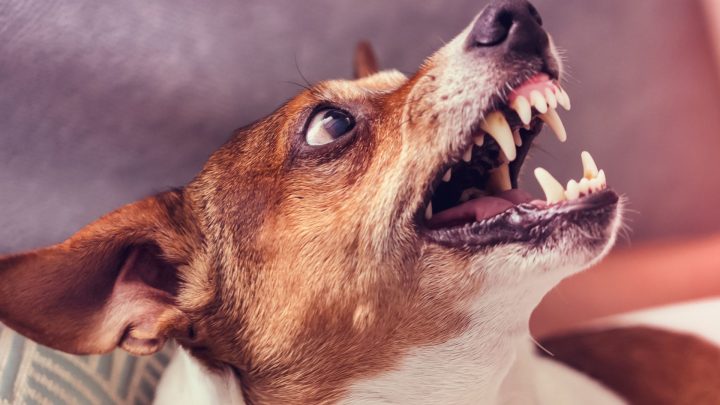
Guarding behavior usually escalates in stages. Catching it early makes it far easier to address.
| Stage | What It Looks Like | What It Means |
|---|---|---|
| Mild | Freezing, eating faster, side-eye (“whale eye”), body positioned over the item | Dog is uneasy but hasn’t decided to escalate |
| Moderate | Growling, lip curling, stiff posture, head lowered over item | Clear warning signal, dog wants space |
| Severe | Snapping, lunging, biting | Dog feels the warning wasn’t heard or worked |
A growl is not the problem. It’s information. A dog that growls is communicating instead of skipping straight to a bite. Punishing a growl often removes the warning system without addressing the underlying discomfort, which can make a dog more likely to bite without notice next time.
Is Resource Guarding Dangerous?
It depends on severity, the resources involved, and who’s around the dog. Guarding around food in a home with no children is a very different risk level than guarding around a toy in a house with toddlers. Take it more seriously if:
- Bites have already happened, even minor ones
- The dog guards around children
- Guarding is increasing in frequency or intensity
- Multiple types of items or locations are now involved
In any of these cases, working with a certified professional dog trainer or veterary behaviorist is worth the cost. This article covers general strategies, but a professional can tailor a plan to your specific dog and household.
How to Address Resource Guarding
The overall goal isn’t to punish the dog for guarding. It’s to change how the dog feels about people approaching their stuff. When a dog stops expecting a threat, the guarding behavior naturally fades.
Here are the methods that hold up best in practice.
1. Stop Taking Things Away for No Reason
If you regularly take toys, chews, or food away from your dog just to “show them who’s boss,” stop. This teaches the dog that hands near their resources equal loss, which reinforces guarding rather than reducing it.
2. Practice the “Trade Up” Method
Instead of taking an item away, offer something better in exchange.
- Approach calmly with a high-value treat (real chicken, cheese, or a favorite snack works well).
- Toss the treat a few feet away from the guarded item.
- While the dog moves to eat the treat, you can pick up the item if needed.
- Give the item back afterward when appropriate, so the dog learns “trading” doesn’t always mean losing the item permanently.
Repeating this teaches the dog that a hand coming near their stuff often means something good is about to happen, not something bad.
3. Hand Feed for a Few Weeks
For food-related guarding, hand feeding part or all of a meal helps rebuild the association between your hands and food in a positive way. Start a few feet away and gradually close the distance over sessions, always watching body language.
4. Desensitize Gradually With Distance
Dogs guard most intensely when they feel cornered or rushed. Training works better when it happens below the dog’s stress threshold.
- Start at a distance where the dog notices you but doesn’t react.
- Toss a treat toward the dog (not directly at the guarded item).
- Slowly decrease distance over multiple sessions, days or weeks, not minutes.
- Stop and back up a step if you see stiffening, freezing, or a hard stare.
Rushing this step is the most common reason resource guarding training fails.
5. Add a “Drop It” or “Leave It” Cue
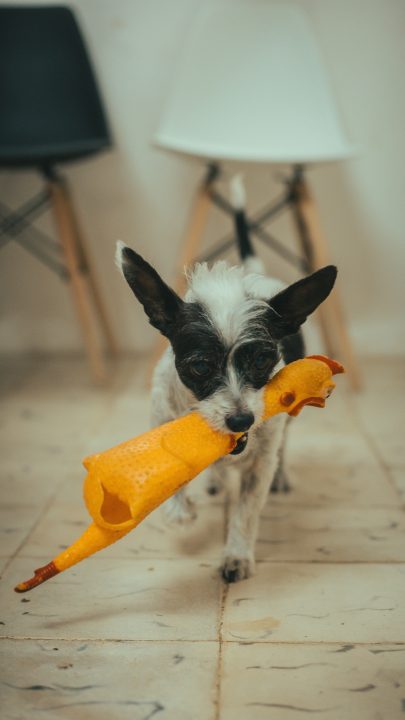
Teaching a solid drop it or leave it cue outside of guarding situations gives you a way to ask for the item calmly, rather than reaching for it directly. Practice with low-value items first (a boring toy, not a raw bone), and always pair the cue with a reward.
6. Manage the Environment
Training takes time, and safety comes first while you work on it. In the meantime:
- Feed dogs separately if guarding happens around other pets.
- Pick up high-value chews when young kids are around, until training progresses.
- Use baby gates or crates to create safe space during meals or chew time.
- Avoid forcing interaction when a dog is eating or chewing.
Management isn’t giving up. It’s preventing bites while the underlying behavior improves.
Common Mistakes to Avoid When Training
- Punishing growls. This removes warning signals, not the underlying discomfort.
- Repeatedly testing the dog by taking items away to “see if they’ve improved.” This just reinforces the guarding.
- Moving too fast. Skipping steps or closing distance too quickly usually causes setbacks.
- Ignoring early signs. Mild guarding is much easier to address than guarding that has escalated to biting.
- Assuming it will resolve on its own. Without intervention, guarding usually gets worse over time, not better.
When to Call a Pro
Reach out to a certified trainer (look for CPDT-KA or similar credentials) or a veterinary behaviorist if:
- Your dog has already bitten someone
- Guarding involves children or multiple household members
- You feel unsafe implementing training on your own
- Guarding is happening across many different items or spaces
- Your dog also shows other anxiety or aggression behaviors
A professional can also rule out medical causes. Pain, dental issues, or discomfort sometimes make dogs more protective of resting spots or reactive to being approached.
preguntas frecuentes
Many dogs improve significantly with consistent training and management, especially when caught early. Severe cases may not disappear completely but can usually be managed safely with ongoing structure.
It’s a form of defensive behavior rather than general aggression. The dog isn’t trying to dominate, they’re trying to protect something they value out of anxiety about losing it.
It’s safer to manage this through separate feeding and toy time rather than letting dogs work it out themselves, since conflicts can escalate quickly.
Not necessarily. It often reflects instinct or past experience rather than the current relationship. Training that builds positive associations around approach and exchange can strengthen trust over time.
Some mild guarding in puppies fades with proper socialization and positive handling, but it’s better to address it early rather than assume it will resolve on its own.
Avoidance can work as a short-term safety measure, but it doesn’t change the underlying anxiety. Combining management with gradual training gives better long-term results.




 English (United States)
  English (UK)
  German
  Italian
  Spanish
  French