Fomentar la empatía y la compasión incluye ser un modelo a seguir, corregir comportamientos inapropiados, ser coherente y reforzar positivamente el comportamiento.
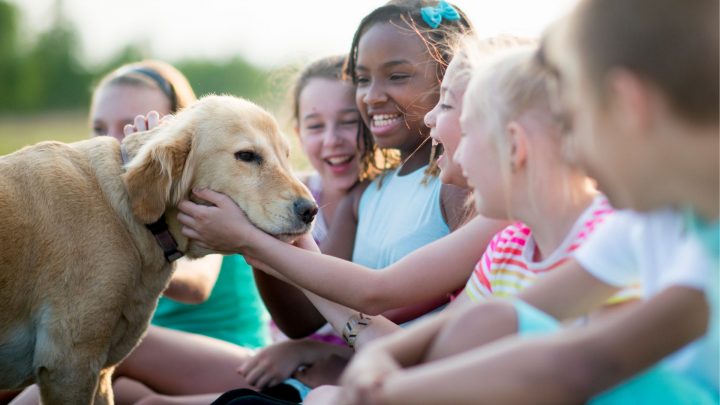
Educar a los niños sobre la compasión y la seguridad de las mascotas
The kids are back to school and that means more learning and growth for all. One subject that doesn’t get enough time in the classroom is compassion, both for fellow humans and for pets and other animals in our lives. We cares deeply about the care and safety of all animals. That’s why we’ve put together these thoughts about how to bring extra learning into the family, taking the time to learn and teach about compassion and safety for the animals (and people) we encounter.
When you own a pet, the responsibility of teaching and learning goes both ways between children and pets. For example, children learn how to feed and care for furry friends and, in turn, what it means to care for another living being outside themselves. Realizing that others have feelings, and that our actions impact those feelings, is the first step. That’s called empathy–the ability to understand and share the feelings of others.
Enfoques para fomentar la empatía y la compasión
Like many social skills, there is a spectrum of empathy and compassion. Not everyone is born with a lot, while others have it in spades without even trying. You can probably think of the people in your life with loads of empathy. And hopefully, you can have compassion for those that don’t. Thankfully, empathy can be taught in a variety of ways.
No es sorprendente que enseñar y fomentar con éxito la empatía y la compasión emplee algunas de las mismas técnicas que podría haber utilizado para enseñarle a su perro o gato cómo quiere que se comporte. Eso incluye ser un buen modelo a seguir, corregir positivamente conductas inapropiadas, ser consistente y elegir selectivamente ejemplos que refuercen las conductas deseadas.
Se un ejemplo a seguir
Even when we’re not in ‘teacher mode’ and we don’t even think they are paying attention, children are learning from our behavior. Modeling the behavior you desire in them is perhaps the most important way to encourage empathy and compassion. We can be positive models for children in simple ways. Taking spiders, flies and bees outside instead of killing them is one example. Giving space, talking kindly, helping or gently petting an injured or shy animal is another. This encourages kindness while being mindful of the animal’s personality and abilities. Many children will be able to generalize and apply this approach to interacting with humans, such as a classmate with a broken arm or someone who uses a wheelchair.
Reforzar el comportamiento positivo
Just as we might give a dog a treat when she sits on command, we must notice and praise children when they are doing the behavior we desire. That can come in the form of direct verbal praise in the moment, “I notice how sweet and gentle you’re being with Mitsy,” or “Wow, you were so compassionate when you checked Mitten’s paw.”
Los niños también pueden ser recompensados con tiempo y atención adicionales con un animal, un amigo o un adulto cuando muestran compasión y empatía por los animales. La mayoría de los niños responden bien a la atención positiva de los demás y están dispuestos a repetir esos comportamientos, sin siquiera pensar en ello.
Corrija suavemente el comportamiento inapropiado
Remembering that everyone’s empathy and compassion fall on a spectrum, that means that some children (and adults) may not be able to learn or generalize from role models. Those individuals might need our help with gentle correction. Just like training an animal, gentle correction needs to be pretty immediate, depending on the age of individual, to be effective.
Preschoolers and kinders need correction within a few minutes or they won’t remember what happened. While safety of the animals is paramount, the time to correction can increase proportionately with age. Often, gentle correction with middle and high schoolers is best done in private later the same day when time allows for deeper discussion and without distractions.
As you might have guessed, abrupt, shaming or correction that is too firm may not achieve the desired behavior. Some children respond to criticism that isn’t constructive in defensive ways. That means they might ignore your correction on purpose next time, or even act out negatively to get more of your attention, even if its your negative response. Be sure your response is calm, measured and deliberate. Take a break if needed to make sure you’re approaching the child with compassion and remembering that sometimes they can’t already know some of the things we take for granted.
Se consistente
The developing brains of children (and animals) try to categorize the world, making observations and then rules about the way the world works. For example, when I wake up in the morning, I get dressed, make my bed, eat breakfast, wash my face and brush my teeth. If every morning is different for a child, they won’t build the connections between neurons in the brain that help them internalize, and automate, that routine. Being consistent, as a role model and with gentle correction, is very important to help children. If you are only gentle with animals sometimes, or their bad behavior goes without correction half the time, the nerve cells in their brain tell them that sometimes its okay to hit an animal when you’re feeling mad.
Tómate un descanso si lo necesitas para ser un buen modelo a seguir. Dedique tiempo en su apretada agenda a hablar y corregir comportamientos inapropiados. Y tenga en cuenta los posibles precedentes que podría estar sentando si no es coherente en sus respuestas.

Elija medios que presenten comportamientos deseados
We won’t delve in to the heated debate here about whether or not video games and television shows effect empathy and compassion. But there is evidence that violence toward animals (and humans) in these and other forms of media can desensitize children, especially very young children who are still learning to differentiate between fantasy versus reality and ‘right’ versus ‘wrong.’
preguntas frecuentes
La presencia de perros en la vida de un niño puede crear oportunidades para aprender lecciones significativas de compasión, empatía y comprensión. Por ejemplo, interactuar con perros les enseña a los niños la importancia de tratar a los demás con gentileza y respeto. Sin embargo, es importante que los padres y cuidadores supervisen las interacciones entre niños y perros para garantizar la seguridad y el bienestar de ambos.
Puedes empezar por ser un buen modelo a seguir. Trate a sus mascotas con amor y respeto, y explíquele sus acciones y sentimientos a su hijo. Discuta cómo los animales tienen sus propios sentimientos, necesidades y formas de comunicarse. Enseñe a los niños a respetar el espacio y los límites personales de los animales. Anime a los niños a demostrar amabilidad hacia los animales y la naturaleza. Fomente debates abiertos, responda las preguntas de los niños y fomente un entorno donde los animales sean tratados con amabilidad y respeto.
Sí, tener mascotas puede ser una manera maravillosa de enseñarles empatía a los niños. Interactuar con mascotas y cuidarlas brinda a los niños oportunidades para desarrollar un sentido de compasión, comprensión y consideración por los sentimientos y necesidades de los demás.



 English (United States)
  English (UK)
  German
  Italian
  Spanish
  French