Cats sleep so much because they are built like tiny hunters. Their bodies are wired to save energy for short, explosive bursts of stalking and pouncing, and most of their snoozing happens in light, easy-to-wake naps rather than one long stretch. Add a dawn-and-dusk body clock and a few extra factors like age, weather and boredom, and you get an animal that can doze away 12 to 16 hours a day without anything being wrong.
So if your cat has spent the afternoon melted into a sunbeam, relax. Below you’ll find how much sleep is normal at every age, the science behind all those catnaps, and the signs that tell you when extra sleep deserves a call to the vet.
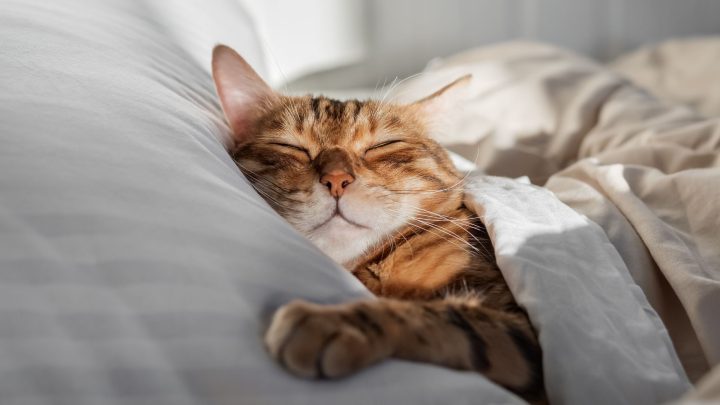
How Many Hours a Day Do Cats Sleep?
A healthy adult cat usually sleeps 12 to 16 hours a day, while kittens and seniors can push past 18. Compare that with the 7 or so hours most adult humans get, and your cat is clocking roughly double your shut-eye.
| Life stage | Typical sleep per day | What it looks like |
|---|---|---|
| Newborn kittens (0 to 2 weeks) | Up to 22 hours | Waking mostly to nurse (PangoVet) |
| Growing kittens | Up to 20 hours | Play hard, crash hard (PetMD) |
| Adult cats | 12 to 16 hours | Many naps plus a few longer sessions (Chewy) |
| Senior cats | 18 to 20 hours | Slower days, longer naps (Trupanion) |
The range is wide, and that’s normal. According to the Sleep Foundation, more than half of cats sleep 12 to 18 hours a day, and close to 40% sleep more than 18.
Cats sleep in shifts, not one long night
You won’t find a cat logging one solid block of sleep. Cats are polyphasic sleepers, which means they break their rest into many sessions across the day and night.
- Session length: most sleep bouts run about 50 to 113 minutes, per the Sleep Foundation.
- Overall rhythm: across 24 hours, cats sleep around 79 out of every 104 minutes, according to The Sleep Doctor.
- Dream time: house cats may get 3 to 8 hours of REM sleep daily, the stage linked to dreaming.
5 Reasons Cats Sleep So Much
The short version: evolution made your cat a sprinter, not a marathon runner. Here’s what’s going on under all that fur.
1. They’re saving energy for the hunt
Stalking, chasing and pouncing burn a lot of fuel in a very short time. Sleeping between those bursts lets a cat recharge so it’s ready to go at full speed. Your indoor cat may hunt nothing scarier than a feather wand, but the wiring is the same.
2. A meat-heavy diet calls for downtime
Wild cats eat high-protein meals and then rest while they digest. The University of Florida’s Animal Airwaves points to the African lion as the classic example, and notes that cats of all sizes, wild or domestic, tend to sleep 10 to 16 hours a day. Good cat food is still protein-rich, so the eat-then-nap pattern sticks around.
3. Their body clock runs on dawn and dusk
I gatti lo sono crepuscular, meaning they’re most active around sunrise and sunset (Trupanion). That’s when their natural prey is out and about. The rest of the day and much of the night becomes prime nap time, which explains the 5 a.m. zoomies across your bed.
4. Most of their sleep is light sleep
A lot of cat sleep is a shallow doze. Cats spend less time in the deepest, most restful stage and more time in lighter stages, so they make up for it with more total hours (PangoVet). Staying in light sleep also keeps them ready to react to a threat. Ever notice an ear swivel toward a sound while the rest of the cat stays “asleep”? That’s the system at work.
When they do drop into REM sleep, you may catch twitching paws, flicking whiskers or eyes darting under closed lids. Researchers believe cats dream during this stage (Sleep Foundation).
5. Nothing exciting is happening
Cats are smart about their schedules. If the next few hours look quiet, they’ll happily sleep through them, as veterinarian Alejandro Caos explains to Chewy. Boredom plays a part too: an indoor cat with no toys, perches or playtime will often fill the gap with naps (PetMD).
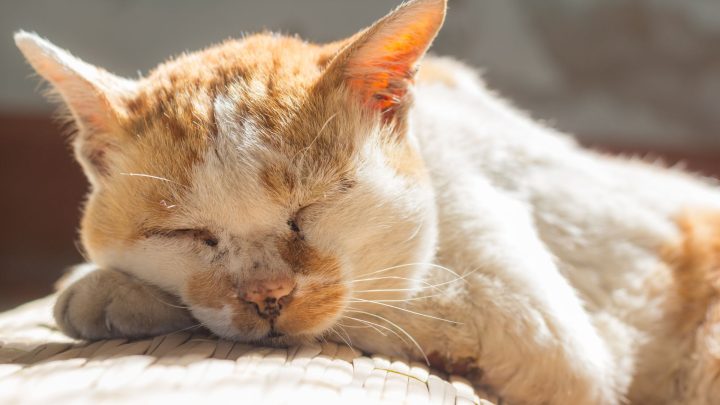
What Makes a Cat Sleep More (or Less)?
No two cats keep the same schedule. Breed, diet, lifestyle and age all shift the numbers (PetMD), and so do a few everyday factors you might not expect.
| Factor | Effect on sleep | What you might notice |
|---|---|---|
| Età | Kittens and seniors sleep the most | Your older cat napping through dinner prep |
| Cold or rainy weather | More sleep | Long sessions curled up in bed on gloomy days (PangoVet) |
| You being away | More daytime sleep | A cat that dozes all day, then greets you wide awake (PangoVet) |
| La noia | More sleep | Napping in place of exploring or playing |
| Stress or anxiety | More sleep, or restless sleep | Hiding in new spots after visitors, a new pet or moved furniture (Your Cat) |
| Deafness | More sleep | Deep naps, since noises don’t wake them (Sleep Foundation) |
If your cat’s sleep shifts with one of these and everything else looks normal (eating, grooming, litter box habits), there’s usually no reason to worry.
When Too Much Sleep Is a Red Flag
A change in sleep matters more than the total. A cat that has always slept 16 hours is fine; a cat that jumps from 14 to 20 hours in a week needs a closer look. Veterinarians at Trupanion suggest booking a vet visit if your cat sleeps more than 20 hours a day.
Cats are experts at hiding illness, so pair any sleep change with a quick check for these signs:
- Eating less or skipping meals
- Drinking more water than usual
- Losing weight
- Seeming sluggish or uninterested when awake
- Hiding more than normal
- Grooming less, or a scruffy, unkempt coat
- Trouble jumping onto favorite spots (a possible sign of joint pain)
- Changes in litter box habits
The first four come straight from PangoVet’s veterinary team as signs that warrant a call. Pain can also make cats sleep more than usual (Hepper). And don’t ignore the opposite problem: a cat suddenly sleeping much less can point to issues like an overactive thyroid, so mention that to your vet too.
Quick rule: normal sleep plus normal appetite and behavior equals a happy, healthy napper. Sleep changes plus any item on that list equals a vet appointment.
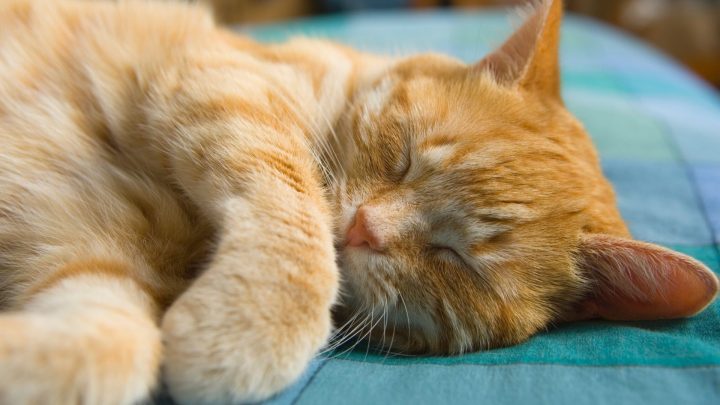
How to Help Your Cat Sleep Better (and Let You Sleep Too)
A cat with a busy, satisfying day sleeps more soundly at night and is less likely to treat your face as a 4 a.m. alarm clock. Try these:
- Play right before bedtime. Ten to fifteen minutes with a wand toy lets your cat “hunt,” then wind down. Experts quoted by Inverse stress daytime enrichment as the fix for nighttime zoomies.
- Serve a meal after play. Hunt, eat, groom, sleep is the natural feline sequence, so feeding after a play session nudges your cat toward a nap.
- Add vertical space and puzzle feeders. Cat trees, shelves and food puzzles keep a cat’s brain busy and cut down on boredom napping (PetMD).
- Keep a steady routine. Cats thrive when they know what’s coming, so regular meal and play times help their sleep settle into a pattern (Chewy).
- Offer a few cozy spots. Some cats love a high perch, while nervous cats often prefer a covered igloo-style bed (Your Cat). Seniors appreciate warm, low beds they can reach without jumping.
- Watch for sleep spot changes. If your cat suddenly abandons a high favorite for the floor, it may be struggling to jump. That’s worth a vet check.
Domande frequenti
For kittens and senior cats, yes, 18 to 20 hours can be normal. For a healthy adult cat, regularly sleeping more than 20 hours is a good reason to check in with your vet, especially if it’s a new habit.
Cats are crepuscular, so they’re wired to be most active around dawn and dusk. If they’re alone and bored during the day, they bank even more sleep and spend it later. More daytime play and a pre-bedtime play session usually help.
Most likely. During REM sleep, cats show fast eye movements and brain activity similar to when they’re awake, and researchers have seen cats seemingly act out dreams (Sleep Foundation). Those little paw twitches are a good clue.
Often, yes. Cold, gray and rainy days tend to send cats into longer sessions in warm beds. Expect your cat’s sleep to creep up a bit when the weather turns.
There’s no need to. Cats sleep when their bodies need it, and most of that sleep is light, so they’ll wake up quickly on their own. If you can’t rouse your cat easily, or it seems confused or weak when awake, contact your vet right away.
Senior cats slow down, much like older people do, and spending more hours napping is a normal part of aging. Arthritis, kidney disease and thyroid problems are also common in older cats, though, so keep up with regular senior wellness exams.
Sleep bouts commonly last about 50 to 113 minutes, with plenty of shorter dozes mixed in.




 English (United States)
  English (UK)
  German
  Italian
  Spanish
  French