Zur Förderung von Empathie und Mitgefühl gehört es, ein Vorbild zu sein, unangemessenes Verhalten zu korrigieren, konsequent zu sein und Verhalten positiv zu verstärken.
Inhaltsverzeichnis
- Aufklärung von Kindern über Mitgefühl und Sicherheit bei Haustieren
- Ansätze zur Förderung von Empathie und Mitgefühl
- Wählen Sie Medien, die gewünschte Verhaltensweisen präsentieren
- Häufig gestellte Fragen
Aufklärung von Kindern über Mitgefühl und Sicherheit bei Haustieren
The kids are back to school and that means more learning and growth for all. One subject that doesn’t get enough time in the classroom is compassion, both for fellow humans and for pets and other animals in our lives. We cares deeply about the care and safety of all animals. That’s why we’ve put together these thoughts about how to bring extra learning into the family, taking the time to learn and teach about compassion and safety for the animals (and people) we encounter.
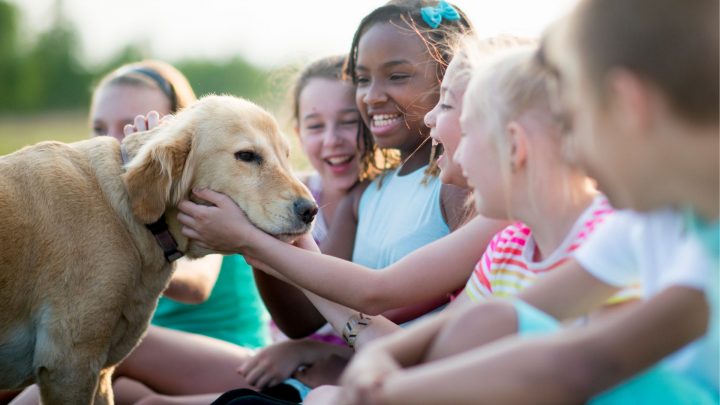
When you own a pet, the responsibility of teaching and learning goes both ways between children and pets. For example, children learn how to feed and care for furry friends and, in turn, what it means to care for another living being outside themselves. Realizing that others have feelings, and that our actions impact those feelings, is the first step. That’s called empathy–the ability to understand and share the feelings of others.
Ansätze zur Förderung von Empathie und Mitgefühl
Like many social skills, there is a spectrum of empathy and compassion. Not everyone is born with a lot, while others have it in spades without even trying. You can probably think of the people in your life with loads of empathy. And hopefully, you can have compassion for those that don’t. Thankfully, empathy can be taught in a variety of ways.
Es überrascht nicht, dass bei der erfolgreichen Vermittlung und Förderung von Empathie und Mitgefühl einige der gleichen Techniken zum Einsatz kommen, mit denen Sie Ihrem Hund oder Ihrer Katze vielleicht beigebracht haben, wie sie sich verhalten sollen. Dazu gehört, ein gutes Vorbild zu sein, unangemessenes Verhalten positiv zu korrigieren, konsequent zu sein und gezielt Beispiele auszuwählen, die das gewünschte Verhalten verstärken.
Sei ein Vorbild
Even when we’re not in ‘teacher mode’ and we don’t even think they are paying attention, children are learning from our behavior. Modeling the behavior you desire in them is perhaps the most important way to encourage empathy and compassion. We can be positive models for children in simple ways. Taking spiders, flies and bees outside instead of killing them is one example. Giving space, talking kindly, helping or gently petting an injured or shy animal is another. This encourages kindness while being mindful of the animal’s personality and abilities. Many children will be able to generalize and apply this approach to interacting with humans, such as a classmate with a broken arm or someone who uses a wheelchair.
Positives Verhalten verstärken
Just as we might give a dog a treat when she sits on command, we must notice and praise children when they are doing the behavior we desire. That can come in the form of direct verbal praise in the moment, “I notice how sweet and gentle you’re being with Mitsy,” or “Wow, you were so compassionate when you checked Mitten’s paw.”
Kinder können auch mit zusätzlicher Zeit und Aufmerksamkeit für ein Tier, einen Freund oder einen Erwachsenen belohnt werden, wenn sie Mitgefühl und Einfühlungsvermögen für Tiere zeigen. Die meisten Kinder reagieren gut auf die positive Aufmerksamkeit anderer und sind bereit, diese Verhaltensweisen erneut zu zeigen, ohne darüber nachzudenken.
Korrigieren Sie unangemessenes Verhalten sanft
Remembering that everyone’s empathy and compassion fall on a spectrum, that means that some children (and adults) may not be able to learn or generalize from role models. Those individuals might need our help with gentle correction. Just like training an animal, gentle correction needs to be pretty immediate, depending on the age of individual, to be effective.
Preschoolers and kinders need correction within a few minutes or they won’t remember what happened. While safety of the animals is paramount, the time to correction can increase proportionately with age. Often, gentle correction with middle and high schoolers is best done in private later the same day when time allows for deeper discussion and without distractions.
As you might have guessed, abrupt, shaming or correction that is too firm may not achieve the desired behavior. Some children respond to criticism that isn’t constructive in defensive ways. That means they might ignore your correction on purpose next time, or even act out negatively to get more of your attention, even if its your negative response. Be sure your response is calm, measured and deliberate. Take a break if needed to make sure you’re approaching the child with compassion and remembering that sometimes they can’t already know some of the things we take for granted.
Seien Sie konsequent
The developing brains of children (and animals) try to categorize the world, making observations and then rules about the way the world works. For example, when I wake up in the morning, I get dressed, make my bed, eat breakfast, wash my face and brush my teeth. If every morning is different for a child, they won’t build the connections between neurons in the brain that help them internalize, and automate, that routine. Being consistent, as a role model and with gentle correction, is very important to help children. If you are only gentle with animals sometimes, or their bad behavior goes without correction half the time, the nerve cells in their brain tell them that sometimes its okay to hit an animal when you’re feeling mad.
Machen Sie eine Pause, wenn Sie sie brauchen, um ein gutes Vorbild zu sein. Nehmen Sie sich in Ihrem vollen Terminkalender die Zeit, über unangemessenes Verhalten zu sprechen und es zu korrigieren. Und seien Sie sich der möglichen Präzedenzfälle bewusst, die Sie schaffen könnten, wenn Sie in Ihren Antworten inkonsistent sind.

Wählen Sie Medien, die gewünschte Verhaltensweisen präsentieren
We won’t delve in to the heated debate here about whether or not video games and television shows effect empathy and compassion. But there is evidence that violence toward animals (and humans) in these and other forms of media can desensitize children, especially very young children who are still learning to differentiate between fantasy versus reality and ‘right’ versus ‘wrong.’
Häufig gestellte Fragen
Die Anwesenheit von Hunden im Leben eines Kindes kann Gelegenheiten für sinnvolle Lektionen in Mitgefühl, Empathie und Verständnis schaffen. Durch den Umgang mit Hunden lernen Kinder beispielsweise, wie wichtig es ist, andere sanft und respektvoll zu behandeln. Es ist jedoch wichtig, dass Eltern und Betreuer die Interaktionen zwischen Kindern und Hunden überwachen, um die Sicherheit und das Wohlbefinden beider zu gewährleisten.
Sie können damit beginnen, ein gutes Vorbild zu sein. Behandeln Sie Ihre Haustiere mit Liebe und Respekt und erklären Sie Ihrem Kind Ihre Handlungen und Gefühle. Besprechen Sie, wie Tiere ihre eigenen Gefühle, Bedürfnisse und Kommunikationsweisen haben. Bringen Sie Kindern bei, den persönlichen Raum und die Grenzen von Tieren zu respektieren. Ermutigen Sie Kinder, Freundlichkeit gegenüber Tieren und der Natur zu zeigen. Fördern Sie offene Diskussionen, beantworten Sie die Fragen der Kinder und schaffen Sie ein Umfeld, in dem Tiere mit Freundlichkeit und Respekt behandelt werden.
Ja, Haustiere können eine wunderbare Möglichkeit sein, Kindern Empathie beizubringen. Der Umgang mit und die Pflege von Haustieren bietet Kindern die Möglichkeit, Mitgefühl, Verständnis und Rücksichtnahme auf die Gefühle und Bedürfnisse anderer zu entwickeln.



 English (United States)
  English (UK)
  German
  Italian
  Spanish
  French