Cats are horrible when it comes to taking medicine. Yowling and thrashing. Spitting out their pills. Scratching and biting as you try to put the syringe in their mouth. So what do you do when your cat won’t take liquid medicine? Are there any ways to keep them from shredding your arms as you try to help them feel better? While you can’t just tell them to sit still, there are ways to make giving your cat liquid medicine painless.
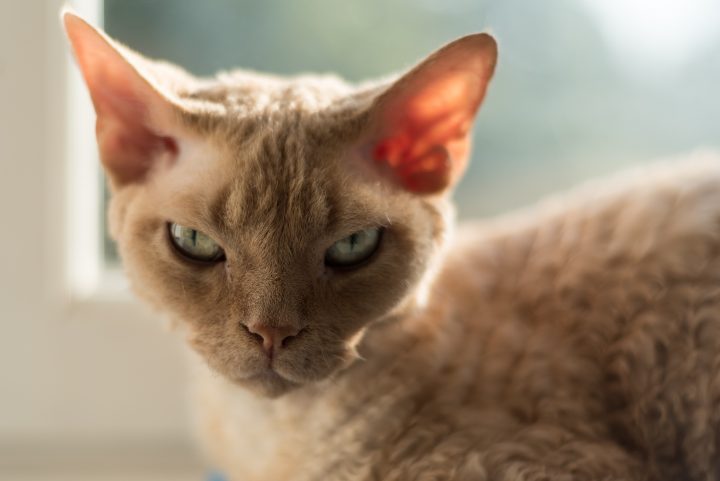
Cat Won’t Take Liquid Medicine?
First off, let’s talk about why your cat won’t take liquid medicine. The main reason is the unfamiliarity of it all. A sick cat is a stressed cat. Therefore, they aren’t going to like anything upsetting their routine further. Second, most medications aren’t the most appetizing. While some cats have no issues licking up a liquid medication, others are going to turn their nose up at it or even foam at the mouth.
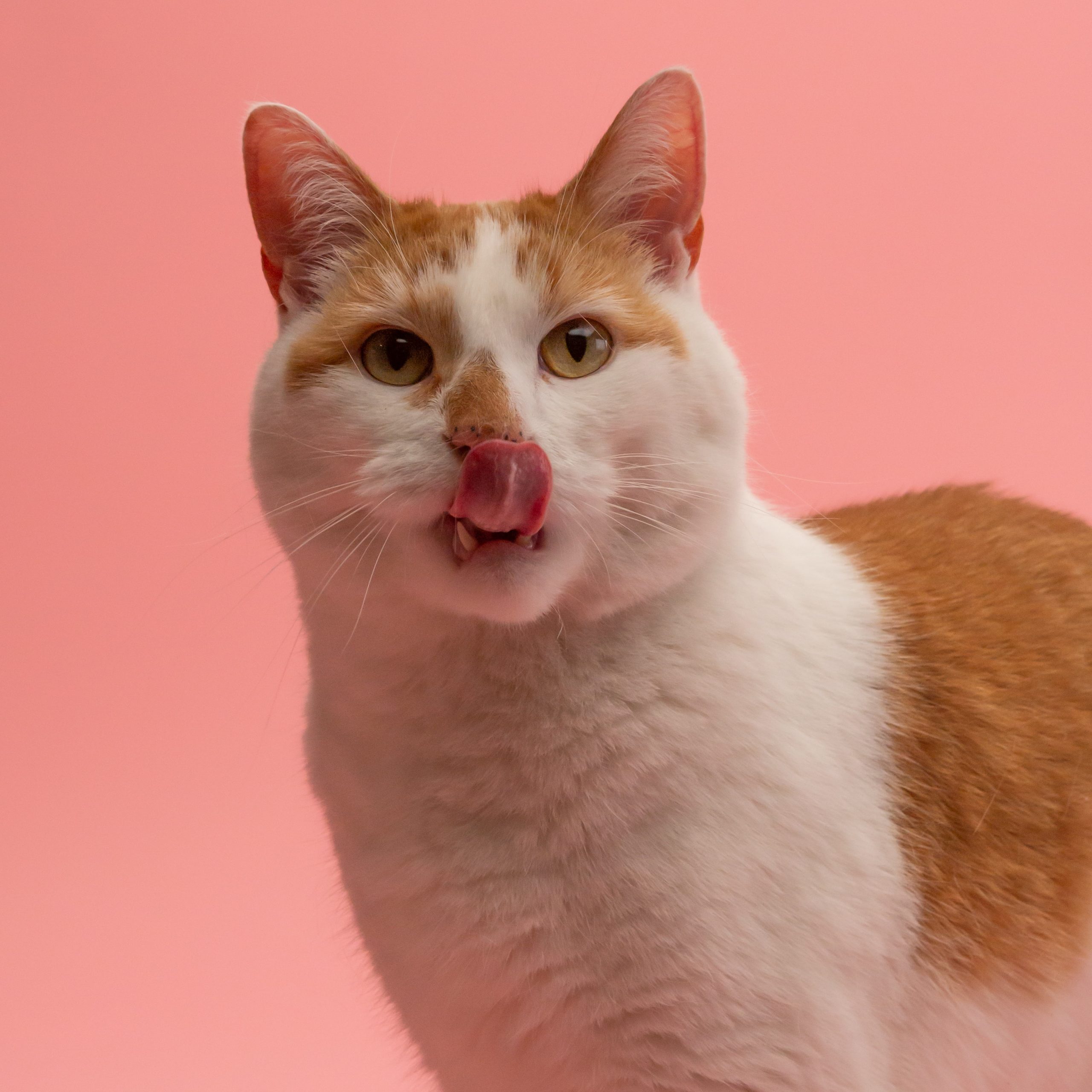
(Ist dein Katze leckt sich die Lippen ohne Medikamente? Erfahren Sie es in unserem Blogbeitrag!)
Lastly, your technique might be wrong. Here’s how to give cats liquid medicine: never come at them head-on. Cats do not like being approached from the front, especially when they are aggravated. Try coming towards your cat to administer the liquid medication from the side or behind. Envelope them in your arms to make them feel safe.
Es gibt Katzen, die eine Pille oder ein flüssiges Medikament unter keinen Umständen ohne weiteres vertragen. Wenn bekannt ist, dass Ihre Katze flüssige Medikamente ablehnt, müssen Sie möglicherweise mit dem Tierarzt über andere für sie verfügbare Medikamente sprechen.
The Don’ts of Giving Liquid Medicine to a Cat
While on the subject of what not to do when giving medicine to your cat, let’s cover a few more things. There are a couple of mistakes people tend to make when trying to get a cat to take medication:
- You try mixing the medicine in with your cat’s water. Don’t do this. Most cats are picky about their water and won’t drink it if it tastes even slightly off. Furthermore, your cat needs to stay hydrated when they are sick, or their condition could worsen.
- Sie geben Ihrer Katze das Arzneimittel jeden Tag zur gleichen Zeit. Obwohl dies eine gute Idee zu sein scheint, weil Katzen Routine mögen, könnte es sie tatsächlich noch mehr verärgern. Ihre Katze wird sich zu dieser Tageszeit weigern, nach draußen zu gehen, selbst wenn es um Futter geht.
- Sie haben die Medizin unter ihr Lieblingsessen gemischt. Aus dem gleichen Grund wie oben: Wenn Ihre Katze anfängt, etwas Schlechtes in ihrer Routine oder ihrem Futter zu erwarten, wird sie darüber die Nase rümpfen. Außerdem könnte Ihre Katze nur eine kleine Futterportion fressen und einen Teil der Medikamentendosis zurücklassen.
Kann ich flüssige Medikamente mit Katzenfutter mischen?
Yes, you can mix your cat’s liquid medication with food, but is it the best idea? Not always. Before attempting to mix liquid medicine with your cat’s meal, talk to your vet first. Some medications can’t be added to good because of the ingredients. For example, some medicines will bind with cheeses or a cheesy gravy. Your cat won’t get their medicine if that happens!
That said, if your cat won’t take liquid medicine directly, tempting them with food or a treat is one of the best ways to go about it. Keep in mind that cats are clever and may eat around the liquid medication if you don’t mix it in well enough. Additionally, they may smell the food and refuse to eat.
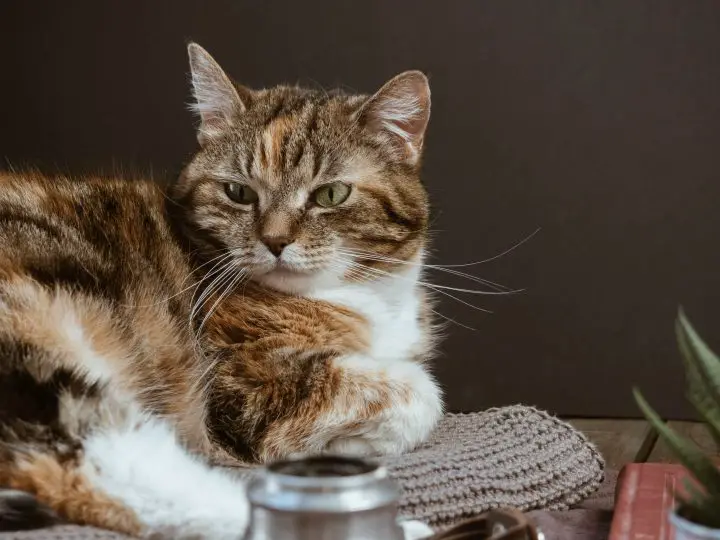
Wie man Medikamente zusammen mit der Nahrung verabreicht
Want to try the food trick with liquid medicine? As mentioned earlier, using your cat’s favorite wet food could end badly. Instead, pick up a can or two of kitten formula pate from the grocery store.
Warum? Denn Kätzchenpastete soll schmecken wirklich, wirklich gut. It will be a fabulously tempting treat for your adult cats, as well as sick kittens. They’ll go nuts for the kitten pate and never realize they just ate a dose of medication, too.
Probieren Sie eine kleine Portion Kätzchenpastete auf einem Teller. Fügen Sie eine kleine Menge Medikament hinzu. Mischen Sie beides und prüfen Sie, ob Ihre Katze die Portion frisst.
Haben sie es verschlungen? Gut. Fügen Sie etwas mehr Nahrung und Medikamente hinzu, um sicherzustellen, dass sie die volle Menge erhalten.
Tun Sie dies wiederum als Belohnung vor oder nach der regulären Mahlzeit. Das verhindert, dass Ihre Katze misstrauisch oder wählerisch wird.
So verabreichen Sie Medikamente per Hand
Manchmal gibt es Einschränkungen, die dazu führen, dass man einer Katze flüssige Medikamente per Hand verabreichen muss. Die folgenden Schritte sollen Ihnen dabei helfen, einer unkooperativen Katze Medikamente zu verabreichen:
- Bitten Sie bei Bedarf einen Freund in Ihrer Nähe um Hilfe.
- Legen Sie Ihre Vorräte bereit. Sie sollten ein Handtuch unter Ihrer Katze haben. Halten Sie die Spritze mit der verordneten Medikamentenmenge bereit und halten Sie sie bereit.
- Place your cat on the towel with their back facing you. If possible sit their back against your leg or the crook of your arm so they can’t escape.
- If your cat is going to squirm or get aggressive, use the towel to wrap them up. Call it what you want—a cat burrito, purrito, or Handhabung von Handtüchern—it’s a safe way to restrain your cat.
- Some cats may lick at the tip of the syringe. Bead a little of the medicine to see if they will do that. If so, you won’t have to fight them.
- Your cat won’t take liquid medicine that way? Gently grab the top of their head with one hand. Your forefinger and thumb should be on the cat’s cheekbones. Neigen Sie den Kopf nicht nach oben.
- Heben Sie die Spritze mit der anderen Hand an den Mundwinkel, angewinkelt hinter den Eckzähnen.
- Schieben Sie die Spritze weiter nach vorne, bis sie in den Mund gelangt. Ihre Katze könnte die Zähne zusammenbeißen. Hier kann ein zusätzliches Paar Hände Ihnen helfen, den Mund offen zu halten.
- Drücken Sie die Spritze vorsichtig zusammen, um das Arzneimittel abzugeben. Tun Sie dies langsam, damit Ihre Katze schlucken und atmen kann.
- Sobald das Arzneimittel verabreicht wurde, lassen Sie Ihre Katze los. Geben Sie ihnen eine Belohnung für ihr gutes Verhalten.
Das folgende Video zeigt Ihnen, wie Sie flüssige Medikamente verabreichen:
Was mache ich, wenn meine Katze Medikamente erbricht?
In the event that your cat is vomiting up the liquid medicine, don’t immediately try to give your friend more. The best course of action is to call the vet and ask what to do. If your cat won’t take liquid medicine because it won’t stay down, the vet may have to try something else.
Also, if you’re worried your cat will throw up a larger dose, cut the dose in half in the beginning. See their reaction first then start building up to a bigger dose. This could help your cat keep down a small portion.
Was passiert, wenn meine Katze Schaum vor dem Maul hat?
You just gave your kitty a shot of medication but now she’s foaming at the mouth and shaking her head. Should you be concerned? Not really. Foaming at the mouth is a dramatic reaction that cats have when they have tasted something horrible. If you accidentally squeezed a good portion of medication onto the back of your cat’s tongue, they might start foaming shortly after.
Don’t worry, though. With a drink of water, your cat’s melodramatics will “pawse.”
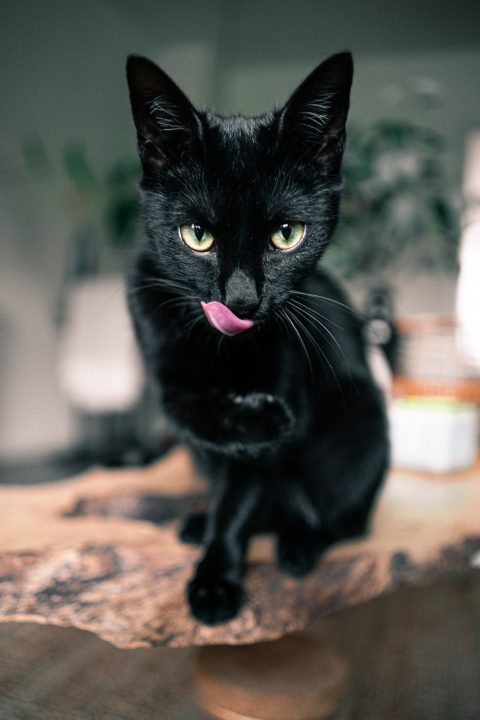
Abschließende Gedanken zur medizinischen Behandlung von Katzen
If your cat won’t take liquid medicine, don’t give up! Sometimes, all you need to do is change up your methods. Swaddling your cat with a towel can help restrain them for liquid medication. Remember to go slow and be gentle. If you can give the liquid medicine with food, try it with kitten pate and in smaller portions. Hopefully, your furry friend will feel better soon!
Häufig gestellte Fragen
Wenn Ihre Katze besonders unruhig ist, sollten Sie sie in ein Handtuch wickeln, um ihre Bewegungen einzuschränken. Katzen können Ihre Gefühle spüren, daher ist es wichtig, während des gesamten Prozesses ruhig und entspannt zu bleiben. Sprechen Sie mit beruhigender Stimme mit Ihrer Katze. Nehmen Sie nach Möglichkeit die Hilfe einer anderen Person in Anspruch. Eine Person kann die Katze halten, während die andere Person das Medikament verabreicht. Geben Sie Ihrer Katze ein kleines Leckerli oder lecken Sie etwas ab, was sie mag (z. B. Thunfischsaft), um eine positive Assoziation zu erzeugen. Versprühen Sie das Medikament vorsichtig nach und nach, während Sie die Katze schlucken lassen. Sobald das Medikament verabreicht wurde, bieten Sie Ihrer Katze ein weiteres Leckerli an und loben Sie sie für ihre Kooperation. Wenn Ihre Katze Probleme hat, zwingen Sie sie nicht dazu. Machen Sie eine Pause und versuchen Sie es später noch einmal. Beständigkeit und Geduld sind der Schlüssel.
Wenn alles andere fehlschlägt, versuchen Sie, das Medikament in das Futter Ihrer Katze zu mischen!
Sie können versuchen, das Medikament in etwas zu verstecken, das die Katze mag, beispielsweise in ihrem Futter oder einem Leckerli.



 English (United States)
  English (UK)
  German
  Italian
  Spanish
  French